Donald Trump has threatened to join Saudi air strikes after 12 people were killed and more than 300 left injured in an attack on Riyadh's airport. Defence Secretary Wes Streeting called the Houthi airstrike on King Khalid International Airport a 'dangerous escalation' and said the UK was assisting the kingdom, including with air-to-air refuelling.
Attack details and impact
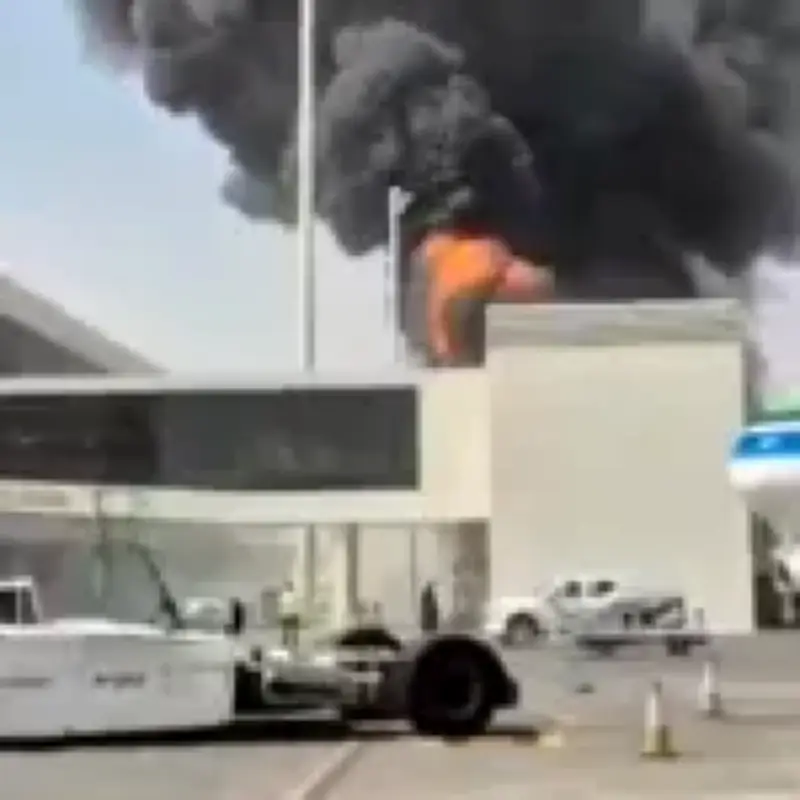
A regional official in Riyadh speaking on condition of anonymity said the Houthi strike had hit a complex housing both Terminals 3 and 4, which handle domestic flights. Footage showed a missile striking a Saudia Airlines jet parked at the terminal, destroying it in a cloud of black smoke. As of Sunday, flight tracking data show all operations remain suspended at Saudi Arabia's largest airport, which handles some 40 million passengers a year.
The US president said on Saturday he was deciding whether to join Saudi airstrikes against the Houthi rebels. Asked if the US would get involved, Trump replied: 'We'll find out'. He also confirmed he would be speaking to Saudi Crown Prince Mohammed bin Salman. 'We may. We're going to look at it. We just found out about the recent attack, so we'll make a decision. We move very quickly,' the president said.
Warnings and UK response
In a warning to airlines, the Iran-backed militia in Yemen wrote on X: 'We renew our warning to all airlines, experts, employees, workers and travellers against using Saudi airports and airspace, as they are vulnerable to attack and have become a theatre of operations for our forces, with the exception of the airports in (the holy cities of) Mecca and Medina.'
Streeting called the Riyadh Airport attack 'contemptible'. He told Sky News: 'What we've seen overnight is a dangerous escalation and I'm afraid an increasing pattern of behaviour from the Houthis that's targeting civilian sites in Saudi Arabia. This is completely contemptible action and it's one of the reasons why the UK is providing support to Saudi Arabia in the form of air defences, but also air-to-air refuelling. We want to see an end to this conflict. It cannot be right that the Houthis are attacking civilian targets in this way.'
Broader context and security measures
The attack came as the WPC Energy Congress is getting underway just six miles from the facility. Authorities confirmed the international event was going ahead as planned with 70 ministers, 300 company executives and representatives of over 25 international energy organisations having confirmed their attendance. Schools across the kingdom have suspended in-person classes, with students learning remotely until at least Thursday.
A further projectile had also fallen near King Fahd International Airport in Dammam, with another drone intercepted in the region on Sunday. A key ally of the regime in Tehran, the Houthi rebels had until recently stayed on the sidelines of the US-Iran war, although the group has been fighting with Saudi Arabia since the gulf petrostate intervened in Yemen on behalf of its internationally-recognised government in 2015. One of the world's largest oil producers, Saudi Arabia has been providing air support to halt Houthi gains in the Red Sea, the key alternative to the blockaded Strait of Hormuz. However, the kingdom is reportedly running low on missile interceptors and has asked for support from France, Britain, Pakistan and Egypt to protect the region.