Filming yourself while driving has become a popular social media trend, from commute vlogs to car confessionals. But the legal and safety implications are often misunderstood. Bryn Brooker, head of road safety at Nextbase, explains the rules for drivers considering recording on the move.
What the Law Says About Handheld Devices
Since 2022, it has been an offence to hold and use a mobile phone or other relevant device while driving, regardless of what it is being used for. The standard penalty is a £200 fine and six points, which for drivers who have held their licence for less than two years means losing their licence.
Mounted Cameras Are Not a Loophole
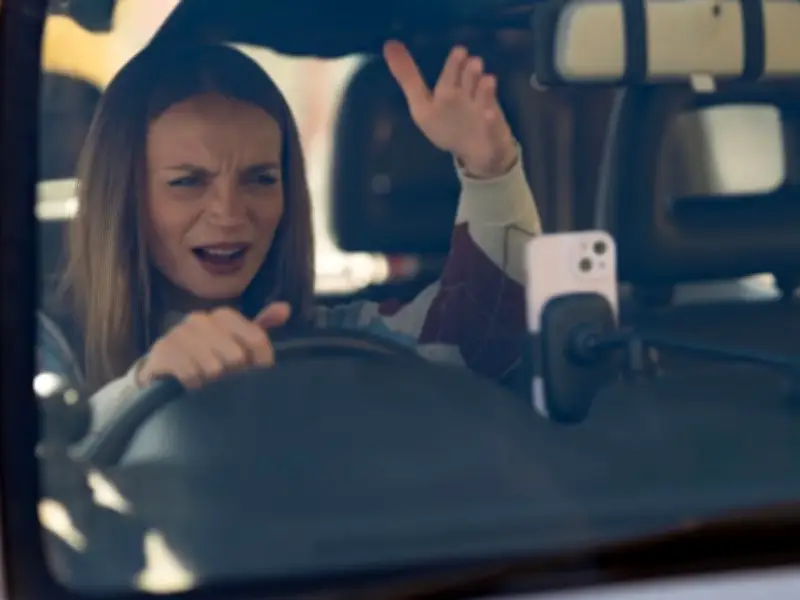
Equipment such as mounts, cradles and tripods can make the legal position less clear. If a device is securely mounted and not being held, it may not fall under the specific hand-held phone offence. However, that does not mean filming while driving is automatically legal.
Even without touching the device, a driver can still face consequences if filming distracts them, affects their control of the vehicle or means they are not paying proper attention to the road. Driving without due care and attention can carry three to nine penalty points and an unlimited fine, with more serious cases potentially leading to disqualification.
So the key message is that the issue is not simply whether the driver touched the device. A camera may be mounted, but if filming affects the way someone drives, it can still become both a safety and legal issue.
The Cognitive Cost of Filming While Driving
Driving can feel automatic, which is why many people feel they have spare capacity to do other things. However, this is a dangerous mindset. Attention switches between tasks rather than being split, and there can be a cost every time it switches.
Filming takes your eyes off the road, can take a hand off the wheel, and can divert the part of your brain that should be processing what is ahead. Even if your eyes remain on the road, the act of filming, even hands free, can still delay your reaction times. This is known as inattentional blindness, where drivers may not process everything in the road environment that they need to monitor their surroundings effectively, identify potential hazards and respond to unexpected situations.
Vlogging as a Performance
What separates filming from a phone call is that it is a performance. You are managing how you sound, whether you are in shot, whether the light is right. That is a second job running alongside the driving, and it is the driving that gets demoted.
There is also a content problem. If the journey is the content, there is an incentive for the journey to be interesting, whether that is a faster road or a livelier reaction to another driver, which means safety can also be not prioritised.
Safety messaging has not necessarily kept pace with the growth of in-car filming. Most campaigns focus on phones interrupting the journey, a call or message can wait, so put the phone down and focus on driving. Filming is different: the phone or camera is not interrupting the journey; it is the reason for it.
The Verdict: Record Before You Move Off
The enforcement risk and the safety risk are not the same. You might film for months and never be stopped. But it only takes a moment for a distraction to have serious consequences.
There is also a difference between a camera that records without asking anything of you and a camera you are performing to. The safest option is not to film while driving. If you need footage from inside the car, have a passenger operate the camera or set it up and start recording before you move off, then leave it alone for the entire journey. Once the car is moving, your attention should be on the road. Nothing you say to a camera is worth reaching for while you are driving.