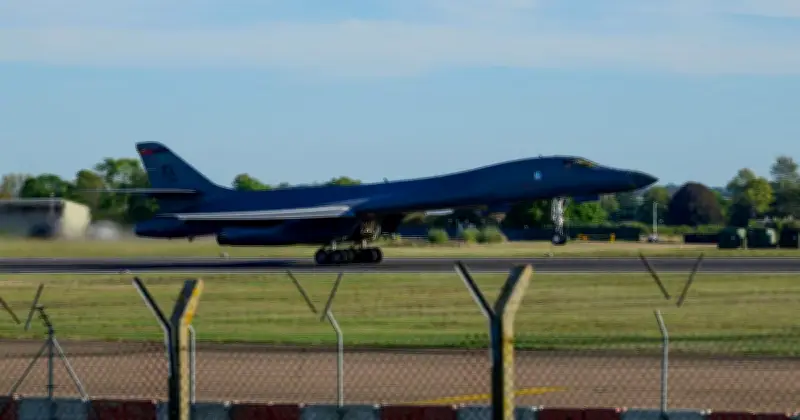
Prosecutors believe one of the suspected masterminds of the RAF Fairford terror plot directed the conspiracy from his prison cell using coded messages. Mohammad Ali al-Hassani, 35, an Iraqi national, was charged with six terror-related offences on Tuesday by the US Department of Justice (DoJ). Mohammed Baqer Saad Dawood al-Saadi, the alleged architect of a wave of antisemitic attacks in Britain, is also believed to have played a key role in organising the plot.
Alleged Coded Messages and Key Roles
The US Department of Justice said al-Saadi allegedly sent "coded messages" in calls from his prison cell to his family to give instructions to the other men plotting the RAF Fairford attack in September. US officials allege al-Hassani, a dual Iranian Iraqi national, and Iranian Mohsen Mohajeri used "a network of contacts in the United Kingdom" to orchestrate the Fairford plot.
Al-Saadi allegedly passed "information and directives" to al-Hassani and Mohajeri in advance of the plot. All three men are accused of working for the banned Iranian Islamic Revolutionary Guard Corps (IRGC) and the Iran-backed Iraqi militia Kataib Hezbollah.
Official Statements and Charges
FBI director Kash Patel said: "This eight-count indictment shows the determination of Iran to commit terrorist attacks in Europe and the US, including one plot that was recently prevented at RAF Fairford, a British Royal Air Force base where American forces were stationed."
Jamie McDonald, the US attorney for the Southern District of New York, said: "Even after one of their co-conspirators was arrested and placed in federal custody, the defendants allegedly continued co-ordinating terrorist activity through coded communications and a network of associates overseas. The threat presented by Iran and Iran-backed terrorist groups to America and our allies is not hypothetical — it is very real."
Details of the Alleged Plot
Al-Hassani "allegedly directed and paid associates in the United Kingdom to conduct preparatory steps and arrange logistics for the RAF Fairford" plot. He is accused of paying an unnamed individual to "perform pre-operational surveillance of RAF Fairford's perimeter".
It is also alleged he "tasked and paid several individuals to help him prepare for the plot, including by procuring vans and barrels of fuel, researching the purchase of chemical accelerants, including large quantities of potassium chloride, and purchasing metallic objects that could be used as explosive shrapnel".
The US Department of Justice said al-Hassani instructed individuals in the UK to outfit the vans "to create the appearance that they were used by a fuel delivery business and a swimming pool supply business", and was "in frequent communication" with the drivers of the vans the morning of the incident. Al-Hassani also kept in contact with the drivers while they approached, including when they encountered security at the base.
Al-Saadi's Background and Recorded Calls
Prosecutors have alleged that al-Saadi was like a son to Soleimani, and that he was supposed to be with Soleimani when the commander was killed. Prosecutors also believe al-Saadi was "close" to the former Supreme Leader of Iran, Ali Khamenei, and warned the dictator three days before the US launched its war "about a potential US strike against Iran".
Prosecutors said in a court filing that on a recorded call al-Saadi "used coded language, and at times stated that they should be careful about using certain language to avoid the call being cut short". On several recorded calls, including into September, al-Saadi and his family discussed payments and approval to carry out a "job", according to summaries prosecutors provided to the judge.
Prosecutors highlighted a call from September and warned the judge they were concerned al-Saadi was attempting to direct others to take action on his behalf. "For example, on his last call on September 24, 2026, when he directed his family to 'give him money so we can do it'," they wrote to the judge. According to the indictment, three days after this call, al-Saadi's co-conspirators attempted to carry out the attack on the RAF base.