Britain may have been only peripherally involved in the bombing of Iran that Donald Trump and Benjamin Netanyahu started, but in the past fortnight it has become clear that Tehran wants to pose a threat inside the UK in response. In the aftermath of the confused incident near RAF Fairford, western officials are weighing up whether to warn publicly that Iran now has US military targets in Europe on its mind, such as the air force base in Gloucestershire.
Iran's Campaign in the UK
What is already accepted by MI5 is that Iran's Islamic Revolutionary Guard Corps (IRGC) has sought to coordinate and promote the targeting of the Jewish community in the UK and Europe, starting from March with a string of arson attacks directed at synagogues and similar sites. That is itself a significant step up from the regime's longstanding campaign of assassination plots and threats against critics overseas, tasks the IRGC has traditionally hired criminal gangs to carry out.
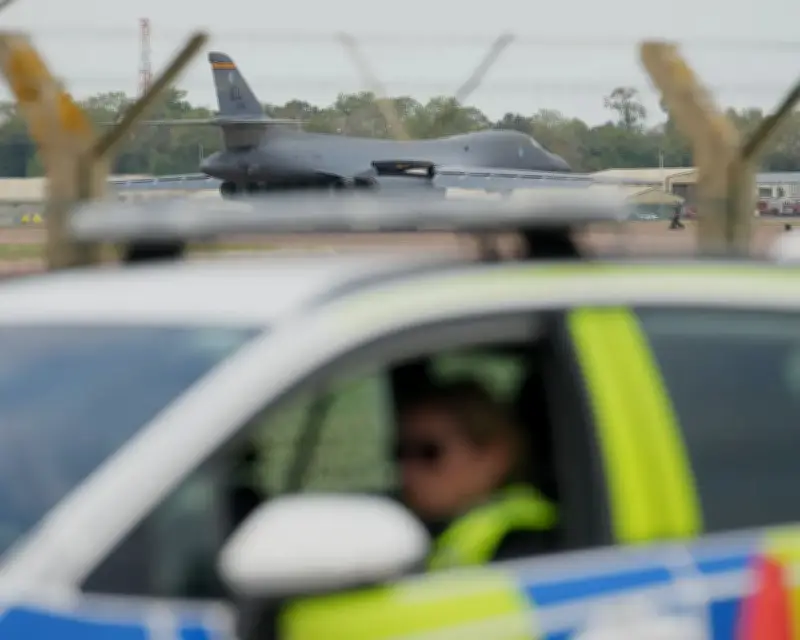
Exactly what happened at RAF Fairford remains unclear, though Iran may have gained something from it for very little. A week later, last Sunday, a worried US decided to withdraw the 12 B-1 bombers it had stationed there, with leaks to US media suggesting there was a fear of a Ukraine-style drone attack.
The Fairford Incident
What is known is that five men from London drove up in three white vans shortly after midnight on 27 September, one of whom called 999 as they did so. All five were arrested in Whelford, a village next to the airbase, only to be released on police bail a day later when no explosives were found or discernible plot discovered. Two more men have been arrested on suspicion of terror offences, and released on police bail. Andy Burnham, the prime minister, has said there were “strong indications” Iran played a part, and on Thursday the Met police chief, Mark Rowley, said “you will see more progress on this investigation”.
RAF Fairford is an exposed site, with plane spotters easily able to get up close enough to photograph and track the forward-deployed US B-1 and B-52 bombers, which with permission from the former prime minister Keir Starmer were taking off to make attack runs into Iran in the spring and early summer.
Threat Assessment
“Iran has a track record of planning and carrying out attacks especially on opponents of the regime in the UK. Given the use of Fairford by US bombers, it's only prudent to assume that they would see an interest in attacking a wider range of targets, whatever their involvement in the Fairford incident,” said Lord Ricketts, a former UK national security adviser. Dr Antonio Giustozzi, a terrorism specialist with the Royal United Services Institute, suggests the drive to the village was “a feint” where individuals, who may have been unwitting, were sent “to hint at what could happen”. But he is sceptical that Iran could pose a real military threat to Fairford or elsewhere.
As for attacking Fairford, piloting first-person view drones of the type used in Ukraine is a skill requiring several days if not weeks of training, while an operation on an airbase would probably take months to prepare. “I doubt that Iran could bring in military-grade explosive to the UK; the last people to do so were the IRA,” Giustozzi said. A genuine attack on RAF Fairford or similar would almost certainly be a one-way mission ending in capture or even death, which it would be it hard to recruit for. But despite the low risks, the US chose to withdraw the B-1 bombers, which cost $300m (£225m) each, as a precautionary move. It was “an operational decision to reduce the risk”, Rich Knighton, the head of the UK armed forces, said on Thursday.
This week, a US congressional research report counted that 81 US military planes, helicopters or drones had been destroyed or damaged in the Iran war, including several struck on the ground at bases in Saudi Arabia and Jordan, a reminder that Iran fought back more effectively than the US acknowledged. The value of lost aircraft and air defence systems is estimated at $1.9bn and $3.3bn respectively. Meanwhile, Trump, desperate to lower oil prices, has set back any future attack on Iran until after the US midterm elections in early November. But regardless of other justifications for the US withdrawal from RAF Fairford, and the police investigation – which has yet to lead to any charges – the wider Iran threat in the UK is now elevated.
Recent Charges and Attacks
A week ago, two Iranian nationals, Salam Ahmadyan from Liverpool and Rahman Salehi from Salford, were charged with terror offences, accused of trying to target the Jewish community in Manchester with a homemade chlorine powder bomb. Prosecutors told a magistrates court on Saturday the pair were in contact with a third party, believed to be in Iran, who directed them and sent them “instructions on how to prepare an explosive device”. A trial at the Old Bailey has been scheduled.
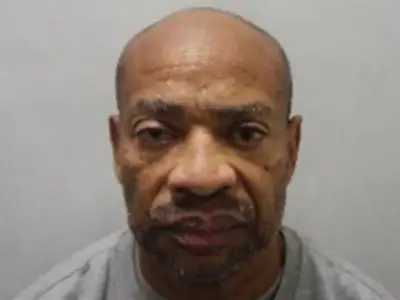
Early in May, the US indicted Mohammad Baqer Saad Dawood al-Saadi, 32, an Iranian-Iraqi dual national, accusing him of promoting and coordinating 18 arson and other low-level terror attacks against Jewish and US sites in the UK and Europe during March and April 2026. He was, the US authorities said, a commander with Kata'ib Hezbollah, an Iraqi group long backed by the IRGC. The following month, in a Manhattan courtroom, al-Saadi pleaded not guilty and said he was “a prisoner of war”. He faces a terrorism trial, accused in one instance of participating in an arson attack on a synagogue in London via a FaceTime video call. Though nobody was killed in the campaign, al-Saadi is accused of telling an associate that he was engaged in “psychological warfare”.
The group al-Saadi is accused of running, Harakat Ashab al-Yamin al-Islamia (HAYI), also claimed credit for the firebombing of four Jewish community ambulances in north London in postings on social media. Four people pleaded guilty to arson in the case in August, in an attack that caused an estimated £1m of damage. Sentencing and a full airing of the facts in court are not due until next year. Jonathan Hackett, a former US marine and intelligence specialist, says the threat in the UK and Europe will endure because Tehran believes it serves a purpose, though it will alter depending on who becomes responsible after al-Saadi. “The psychological effects alone are certainly important; the goal is to create a wedge between the US and its allies,” he added.