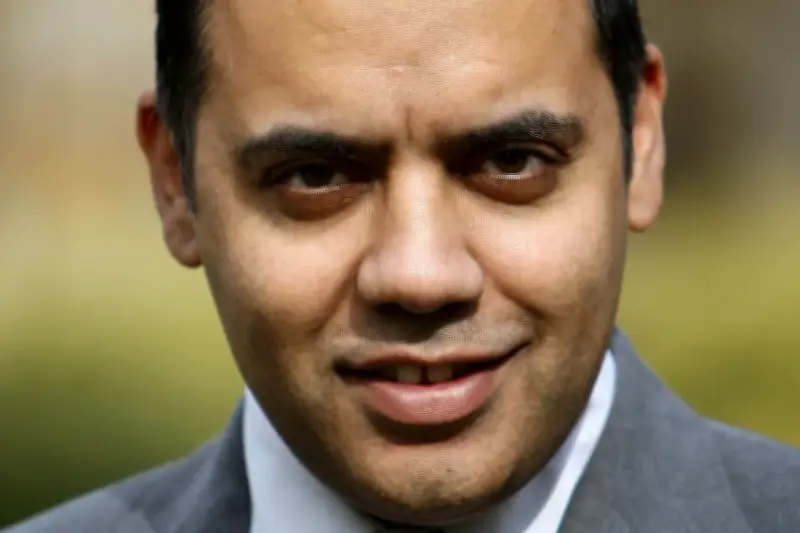
A former Labour minister has been cleared by a judge of his role in a fraudulent Covid-19 testing centre. Shahid Malik was found not guilty of three offences relating to RT Diagnostics in a trial conducted without a jury.
The 58-year-old, who became the MP for Dewsbury in 2005 and was a justice minister and communities minister before losing his seat in the 2010 election, was one of five people charged over the company, which prosecutors said was a “cash cow” set up to take advantage of the Government’s expanding test and trace system in March 2021.
Trial without jury
Earlier this year, following months of evidence at Bradford Crown Court, Judge Christopher Smith discharged the jury while it was deliberating following an allegation of jury tampering. One juror was arrested. Judge Smith took the decision to continue the trial without the jury, with him deciding on the verdicts.
On Thursday, he cleared Mr Malik of fraudulent trading, causing a public nuisance and money laundering. The court heard Mr Malik started the business with pharmacist and former Labour councillor Faisal Shoukat, 39, when the third national lockdown was ending in March 2021.
Verdicts on co-defendants
Shoukat was found guilty of all three offences. Paul Moore, 57, who had a senior role in RT Diagnostics and was Mr Malik’s office manager when he was an MP, was cleared of causing a public nuisance and fraudulent trading. Lynn Connell, 64, a manager at the company, and registered scientist Alexander Zarneh, 70, who was its clinical director, were also cleared of the same two offences.
Prosecutors said RT Diagnostics, which made £6.67 million in three weeks, was set up in “shoddy and inadequate premises” in Halifax, West Yorkshire, and gave out false negative results to customers. Defence barrister Jonathan Laidlaw KC said that Mr Malik’s role in the business had been “very limited indeed” and that he had acted as “a facilitator – putting the money up and making introductions”.
Defence and prosecution arguments
Giving his closing speech to jurors in March, Mr Laidlaw said Mr Malik never went to the premises when it was in operation. He told the court that for most of the time the business was operating, Mr Malik was out of the country and there was no evidence he was told about any of its issues while he was abroad. Mr Laidlaw said the fact that the former MP had made money from RT Diagnostics “can’t possibly be the basis for a guilty verdict”.
The court heard that as the third national lockdown was ending in March 2021, the Government was looking to expand its test and trace system by increasing the number of laboratories offering PCR testing. The defendants were accused of “taking advantage” of that process with an “inadequate and non-compliant” testing company.
Prosecutor Jonathan Sandiford KC said the Halifax laboratory was set up in “shoddy and inadequate premises” with holes in the walls and ceilings and rubbish strewn around. Jurors heard earlier in the trial that the company employed “numerous young people who had little or no training in the handling of Covid-19 samples” and set them to work with no social distancing and no personal protective equipment.
The prosecutor said there was evidence of the company providing false negative results and that it “generated a suspiciously low number of positive results”. Just 45 out of more than 123,000 test results submitted to the national database between May and July 2021 were reported to be positive, the court heard. Mr Sandiford said RT Diagnostics failed to properly handle test samples and sold far more PCR sample collection kits to consumers than it was able to process.
“Because of that, some of the test samples that were returned by consumers to the laboratory were not tested but simply dumped in a room on the premises,” he told jurors. “People who complained enough got told their result was negative, when in fact their sample had not been tested.” He said this meant people who ought to have been self-isolating were going out in public.
Appeal and reporting restrictions
The trial started in October last year and jurors were sent out to start their deliberations in March. In April, they were discharged after an allegation of jury tampering. Judge Smith’s ruling that he could deliver verdicts himself was challenged by Shoukat, but last week three judges at the Court of Appeal refused him leave to appeal. The judges also lifted reporting restrictions on the case.