The Government has issued a statement after nearly 20,000 people signed a petition calling for a major change to legislation.
A petition launched on March 6 urges the Government to amend the Serious Crime Act 2015 so that non-fatal strangulation is treated as seriously as attempted murder, reflecting the intent and potential lethality of the act and ensuring perpetrators face appropriate sentencing of up to life in prison.
Petition reaches 19,094 signatures
The petition, which has hit 19,094 signatures, reads: "Amend section 75A of the Serious Crime Act 2015 so that non-fatal strangulation is treated as seriously as attempted murder, reflecting the intent and potential lethality of the act and ensuring perpetrators face appropriate sentencing of up to life in prison.

"Non-fatal strangulation is one of the strongest predictors of homicide and can cause life-altering injuries days or weeks later. We believe survivors are often left without justice as the severity and intent of the act is minimised."
It continues: "Treating this offence as equivalent in seriousness to attempted murder would better reflect the reality of the violence, improve victim protection, and act as a stronger deterrent."
Ministry of Justice response
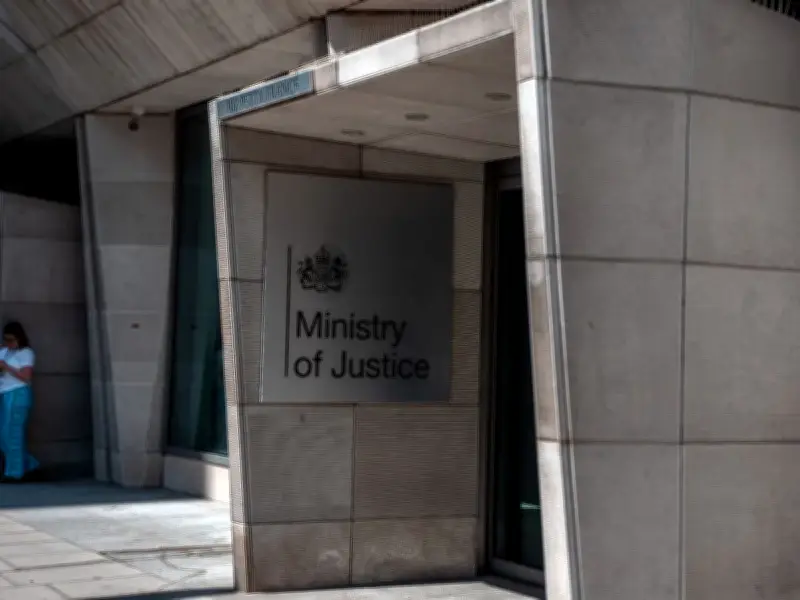
The petition hit 10,000 signatures on August 11, which means that the Government is mandated to issue a written response. In a response from the Ministry of Justice on August 25, the Government clarified the current legislation and explained that while both are "serious offences", a specific offence of strangulation was introduced to the act in 2022.
"Non-fatal strangulation is a serious and dangerous offence that can have devastating consequences," the Government response reads. "Attempted murder, however, is a more serious offence which requires proof of an intention to kill."
The statement continues: "The Government is clear that non-fatal strangulation and suffocation are serious offences. We recognise the profound physical and psychological harm these acts can cause, as well as the growing body of evidence that non-fatal strangulation can be a significant indicator of coercive control, escalating abuse and future risk, including the risk of homicide.
"We recognise the concerns raised by campaigners, victims, survivors and specialist organisations, many of whom argue that the seriousness of non-fatal strangulation is not always fully understood and that these offences can have life-changing consequences even where there is limited visible injury.
"We are grateful to those who continue to raise awareness of these harms and advocate on behalf of victims."
Current law and next steps
The Government goes on to explain that a specific offence of strangulation or suffocation was introduced under section 75A of the Serious Crime Act 2015, which came into force in June 2022.
"The offence was introduced to capture a range of behaviours that interfere with a person's ability to breathe," the statement reads. "Importantly, it enables prosecutors to pursue serious charges even where there may be little or no external evidence of injury, reflecting the inherent dangerousness of this conduct."
While the Ministry of Justice acknowledged the argument that non-fatal strangulation should be treated in law as equivalent to attempted murder, it said that attempted murder is a distinct offence that requires proof that the offender intended to kill.
It continues: "By contrast, the offence under section 75A of the 2015 Act criminalises the intentional act of strangling or suffocating another person, regardless of whether there is evidence of a specific intent to kill. These offences therefore address different forms of offending and culpability, and it remains important that prosecutors and courts can distinguish between them based on the evidence in each individual case."
If the petition goes on to hit the 100,000 signature milestone, the Government must consider the topic for a debate in Parliament.