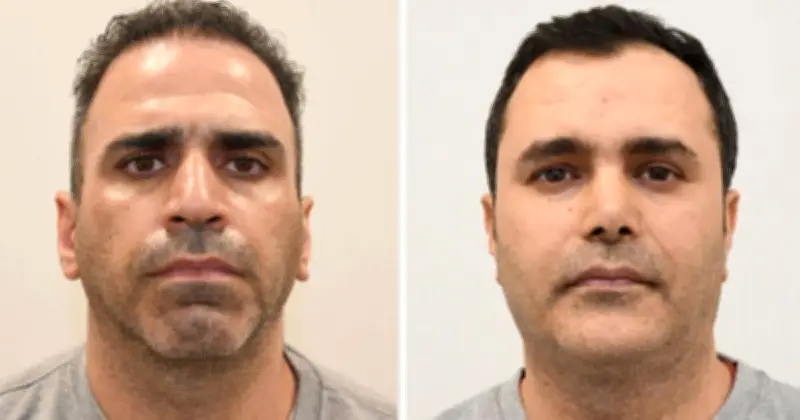
Two Iranian nationals who entered the UK illegally have been convicted of spying for Iran's Islamic Revolutionary Guard Corps (IRGC), with one plotting a knife attack on journalists critical of the Iranian regime.
Mostafa Sepahvand, who arrived in the back of a lorry in 2016, and Farhad Manesh, who travelled via small boat, were promised rewards to send intelligence back to contacts in Iran, a court heard.
Details of the Surveillance Operation
The men compiled detailed information on their targets, including home addresses, workplaces, and the names of their pets. Sepahvand was even prepared to attack journalists critical of the Iranian mullahs, with counter-terrorism detectives believing he was plotting a brutal knife attack.
A third man, Shapoor Noori, also a small boat migrant, was found not guilty at Woolwich Crown Court after jurors deliberated for 19 hours.
National Security Concerns
The convictions have prompted fears that Britain's border chaos was creating a national security crisis. Reform UK leader Nigel Farage said: "I have said multiple times in and out of Parliament that Iranian spies were breaking into the country illegally. The crisis in the Channel is a national security threat. Why does no one listen?"
Deputy Assistant Commissioner Vicki Evans, Senior National Coordinator for Counter Terrorism Policing (CTP), said: "All three of these men were Iranian nationals who arrived in the country illegally between 2016 and 2022. They claimed asylum and have since been granted temporary leave to remain. None of them had regular full-time employment. It is not our case that these men were part of what the media often refer to as a sleeper cell and that they travelled to the UK with the intention of carrying out these criminal acts. They do appear to have met in their community and then to have been directed by Sepahvand and his contacts in Iran."
Threat of Violence and Sentencing
Detectives revealed that "in messages to his contacts in Iran about one of the targets, Sepahvand referenced 'finishing him off'." He was partly motivated by the promise of £150,000 from his contacts in the IRGC and also expected the IRGC to 'fix' his conviction in Iran for theft.
Deputy Assistant Commissioner Evans added: "We believe that the violence that Sepahvand intended to carry out would have been via a low sophistication weapon such as a knife attack."
Counter-terrorism chiefs said Iran is hiring nationals with "settled immigration statuses" to carry out conspiracies on their behalf. Ms Evans added: "The threat from hostile states to the UK is increasing and Iran continues to adapt its approach to using 'proxies', we have seen examples of people who fly into the country to carry out criminal activity and then leave shortly afterwards, to using British nationals or, in this case, Iranian nationals with settled immigration status. People are often tasked via social media with the promise of large amounts of money, as seen in this case."
The targets of the surveillance were two journalists working for the media organisation Iran International, a lawyer working for UK Lawyers for Israel, and a media production professional. Sepahvand took a leading role and would pass on surveillance instructions to Manesh. He frequently messaged Iranian phone numbers of individuals linked to the IRGC.
Sepahvand admitted he had carried out the surveillance on behalf of the IRGC but claimed it had been done under duress. Bill Emlyn Jones KC, prosecuting, told Woolwich Crown Court that the men's "ultimate objective was that one, or perhaps more than one, of their targets would be subjected to serious violence, no doubt as retribution for their criticism of the Iranian regime."
Frank Ferguson, chief Crown prosecutor of the CPS's Special Crime and Counter Terrorism Division, said: "This was a calculated operation to spy on those critical of the Iranian regime. Sepahvand and Manesh were promised rewards to send intelligence back to contacts in Iran, and Sepahvand himself was willing to go beyond surveillance to commit serious violence against their targets. Thankfully, the defendants were stopped before any attack could take place." The men will be sentenced on December 17.