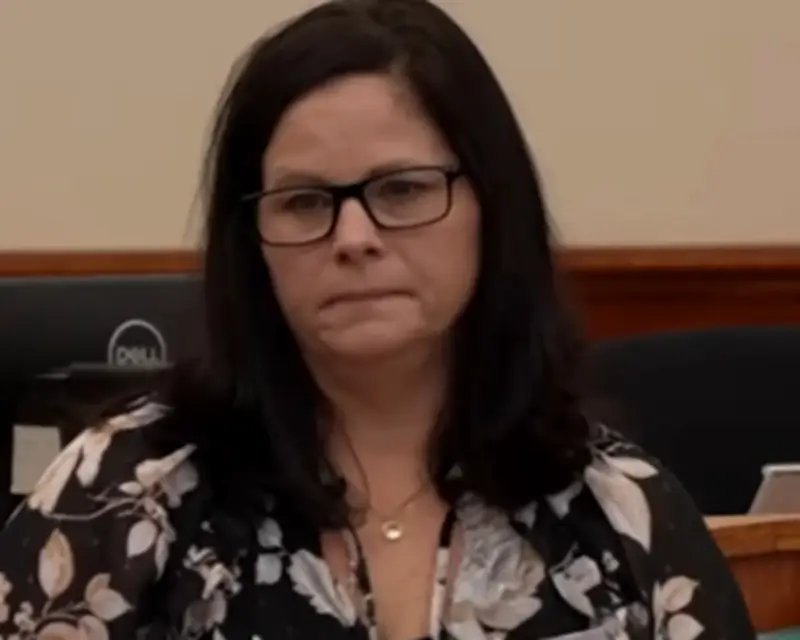
Florida's first district court of appeal has reversed the felony murder conviction of Rhonda Jewell, a 46-year-old woman who accidentally left a 10-month-old baby in a hot car, leading to the child's death. The court ruled that both the third-degree felony murder charge and the charge of leaving a child unattended in a vehicle required Jewell to have knowingly left the baby in the car.
Details of the case
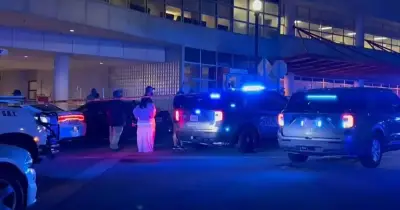
In July 2023, Jewell was babysitting four children from two different families. She forgot that 10-month-old Ariya Paige was in the back seat of her car and went inside to care for the other children. Strapped into her car seat in the Florida summer heat, Ariya died of hyperthermia before Jewell realized her mistake. Jewell was convicted the following year of third-degree felony murder, predicated on the underlying felony of leaving a child unattended in a vehicle, and was sentenced to 17 years in prison.
Court's ruling and legal implications
The charges against Jewell represented an attempt to expand the felony murder doctrine, a legal theory in which any individual involved in a felony that leads to a death can be held criminally responsible for that death. Nearly every state, as well as the federal government, has some form of a felony murder rule. These statutes have resulted in outcomes such as women being convicted of murders committed by their abusers, friends of a 19-year-old boy killed by law enforcement being charged with his death, and a man being held responsible for a fatal accident that occurred while he was handcuffed in the back of a police car miles away.
Defenders of the felony murder doctrine argue that even if an individual didn't intend to kill anyone, they should be held responsible for the resulting harm because they chose to commit a felony that resulted in death. However, in Jewell's case, jurors were told they did not need to find evidence that she intended to commit the underlying felony of leaving Ariya in her car – or even knew it was happening – to convict her of third-degree felony murder. Jurors acquitted Jewell of aggravated manslaughter, the only charge they were told required a finding that Jewell acted with reckless disregard for the baby's life.
Broader context and impact
“This really takes tragic accidents and elevates them to murder offenses,” Caitlin Glass, a Boston University School of Law instructor who co-authored an amicus brief in support of Jewell, told HuffPost. More than 650 children in the US have died after being accidentally left in hot cars since 1990, according to Kids and Car Safety. The deaths follow a familiar pattern: the parent or caregiver is usually stressed, exhausted, distracted, or navigating a change in routine. The baby is asleep and out of view in a rear-facing car seat in the back seat of the car.
Whether these deaths are treated as tragic accidents or punished as crimes is remarkably arbitrary, but it is exceedingly rare for prosecutors to bring felony murder charges in these cases. Amber Rollins, the executive director of Kids and Car Safety, told HuffPost she was aware of fewer than 10 cases in which the responsible adult was charged with felony murder after accidentally leaving a child in a car.
Jewell, who was close friends with Ariya's family, struggled with depression, panic attacks, and suicidal thoughts after the baby's death. “I feel guilty if I laugh or smile. I just have so much guilt from that day,” she told HuffPost. “I don't know how it happened. I just go over and replay it in my head and say, 'what if' or 'why not,' 'Why didn't I just – why? Why?'”
On Wednesday, Florida's first district court of appeal appeared to reject the use of felony murder charges in accidental hot car deaths. “Third-degree felony murder cannot be based on an unenumerated predicate felony that does not require any proof of intent,” the court wrote in its opinion. “This case highlights how imperfect our criminal justice system is to adjudicate an accidental death. There are no winners here; moral outrage is not assuaged. And beneath the tragedy, the issues are legally important.”
Christine Monta of the MacArthur Justice Center, one of the lawyers representing Jewell on appeal, said in a statement: “Tragic accidents are not the equivalent of murder, and the court rightly recognized that Ms Jewell should not be criminally punished for an act that the State of Florida did not – and cannot – prove was knowingly and consciously done.”
The appellate court called for the case to be remanded to the trial court for a new trial. Brian Kramer, a Baker county state attorney, deferred to the attorney general's office, which did not respond to a request for comment. An attorney representing Ariya's family in a civil suit did not respond to a request for comment.