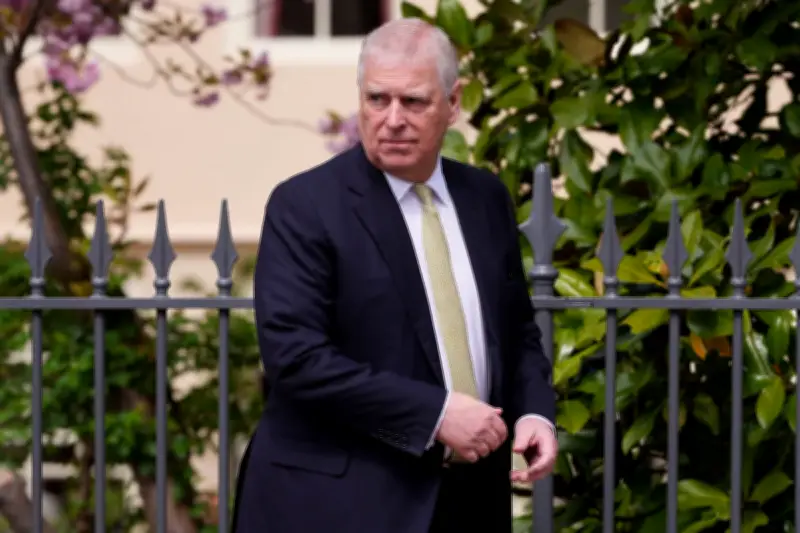
The Duke of York remains locked in a High Court battle over whether evidence obtained during raids on two of his properties can be used in the criminal investigation into him, after police acknowledged the search warrants used were unlawful.
Mr Justice Hilliard said on Thursday that while Andrew and Thames Valley Police had reached an “agreement” that the warrants were unlawful, police have since launched a bid to retain evidence gathered during the searches in February. He said Andrew opposes the bid to retain the evidence, with a hearing in the case to be held in private in 2027.
Background to the Searches
The warrants, issued by a judge at the Old Bailey on February 18, allowed police to raid Andrew’s residence on the Sandringham Estate and his former Windsor home, Royal Lodge, in February. He was then arrested on suspicion of misconduct in public office on February 19, his 66th birthday, following allegations he shared sensitive information with Jeffrey Epstein during his time as the UK’s trade envoy.
Andrew was interviewed under caution before being released under investigation, and denies wrongdoing, with the police probe ongoing.
Court Ruling on Warrants
The King’s younger brother then challenged the search warrants at the High Court, with Mr Justice Hilliard saying in a ruling on Thursday that an “agreement was reached between the claimant and Thames Valley Police that the search warrants were unlawful”.
Mr Justice Hilliard said that a “significant error was made in the application for and grant of the search warrants,” and that was “enough to render the warrants, the searches and the material seized unlawful”. But he also said: “There would be little point handing it back if it could be lawfully seized on some other provision. I will have to decide whether the new application is granted or not. The fact the search warrants have been quashed does not bring the investigation to the end or mean the whole investigation is unlawful.”
Andrew did not attend the hearing, with his barrister making no submissions.
Police Response and Next Steps
In a statement after the hearing, a Thames Valley Police spokesman said: “The initial court’s decision to issue warrants under the specific piece of legislation used was incorrect, and therefore these must be legally quashed. Legal proceedings are currently ongoing to decide how material seized during the searches will be managed and whether we can lawfully retain it in support of our ongoing investigation. Our investigation into alleged misconduct in public office by a man in his 60s from Norfolk remains ongoing, and we continue to pursue all reasonable lines of enquiry to effectively and fairly progress this investigation.”
It is understood that Thames Valley Police applied for search warrants under two parts of the Police and Criminal Evidence Act, but an Old Bailey judge decided warrants were only needed under one. It is further understood that after Andrew launched his legal challenge, it was agreed that the warrants should have been granted under the other part of the legislation, known as Section 9. Warrants under this part allow for searches of items covered by legal privilege, or “excluded material”, including business records and confidential journalistic material.
Mr Justice Hilliard said that after the warrants were granted, police later conceded that the judge “could not properly have been satisfied there were reasonable grounds for believing” that section 9 warrants were not needed, because it was “expressly envisaged” that police would search for material covered by legal privilege and other conditions. The judge also said the case had not previously been heard in open court because the parties agreed the search warrants were unlawful without the need for a hearing.
Thursday’s hearing was expected to hear the police’s bid to restrict access to documents in the claim. But Mr Justice Hilliard said that on Wednesday afternoon police indicated they no longer pursued the restrictions, subject to certain information being redacted, such as the names of individual officers.