Families of 9/11 victims are awaiting a ruling from three Manhattan justices on whether their case against Saudi Arabia can proceed, as a conspiracist conference held nearby casts doubt on the official narrative of the attacks.
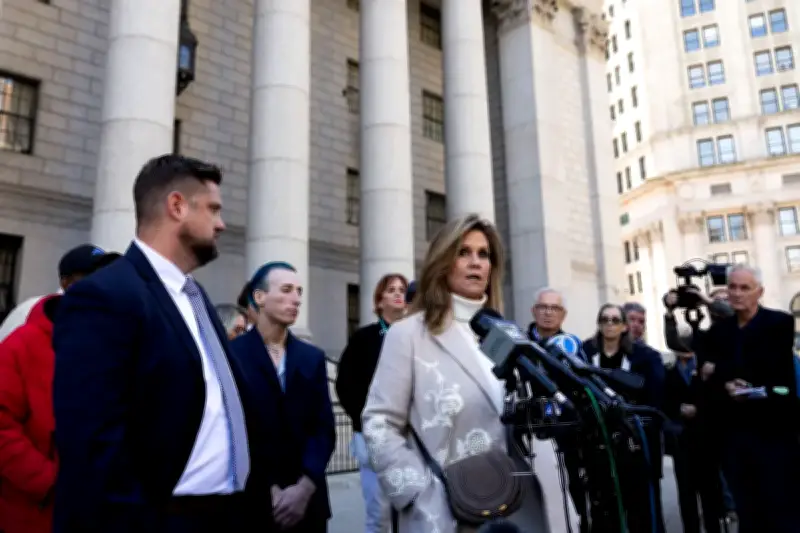
“It’s shocking to me that we are still fighting for justice,” said Terry Strada, national chair of 9/11 Families United, whose husband, Tom, a bond broker at Cantor Fitzgerald, was killed in the north tower of the World Trade Center 25 years ago last month.
Strada began her pursuit of justice in 2004, but last week in New York she and dozens of family members sensed they were closer to a US court hearing their case that Islamists gained influence in Saudi Arabia’s government and provided aid to at least two of the 19 hijackers.
A Potential Path to Court
Should the judges reject a Saudi appeal calling for the case to be dismissed on the basis of sovereign immunity and, citing the Justice Against Sponsors of Terrorism Act (JASTA), uphold a 2005 ruling, the case could come to court in the next year.
The merits of the claims have not been adjudicated. But the direction of the second circuit court of appeals judges’ questions, Strada said, had given the families hope.
“It really was a good day for us,” she said afterward. “The judges asked really meaningful questions and hammered the Saudi attorneys and didn’t let up. They weren’t buying what the Saudis were selling.”
Key Evidence and Allegations
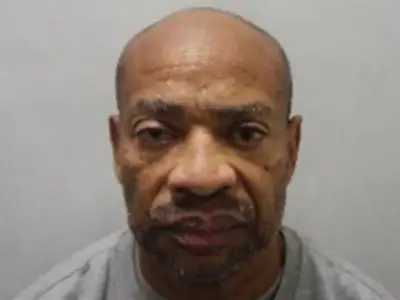
The case centers on the role of Omar al-Bayoumi, a Saudi national who helped find and guarantee lodgings in San Diego for the hijackers Nawaf al-Hazmi and Khalid al-Mihdhar more than a year before the attacks. Both died when they flew American Airlines flight 77 into the Pentagon, killing all 59 people onboard and 125 people on the ground.
Neither of the two hijackers qualified as pilots, and, according to the 9/11 Commission Report, they “were ill-prepared for a mission in the United States … Neither had spent any substantial time in the west, and neither spoke much, if any, English.” The report continued that it was plausible the two men, or the 9/11 mastermind Khalid Sheikh Mohammed, would have tried to identify a friendly contact in the US, and it was unlikely they would have come “without arranging to receive assistance from one or more individuals informed in advance of their arrival”.
In 2012, an FBI report named Fahad al-Thumairy, a Saudi Islamic affairs official and imam of a Saudi-built King Fahd mosque in Culver City, California, as having worked with al-Bayoumi. The report named another Saudi embassy official, Mussaed Ahmed al-Jarrah, who allegedly had ordered al-Bayoumi and al-Thumairy to assist the hijackers.
The report has long been criticized by the 9/11 families. The commission did not have access to videos seized by UK police in the days after 9/11 that showed al-Bayoumi in Washington DC, in which he referenced a “plan” or a sketch of an airplane in blue ink and a mathematical equation for flight path descent rates, or what lawyers for the families call a “flight planning diagram”.
Conflicting Narratives
The case, if it comes to court, turns on whether the assistance the hijackers received from al-Bayoumi and others in California was part of the al-Qaida plot. This is denied by all those accused.
“It has never been the policy of Saudi Arabia to attack its ally, the United States,” said attorney Greg Rapawy, representing the Gulf state. He pointed out that there was “no finding of direction and control” and the attacks had been “compartmentalized even within al-Qaida”. He also pointed to the commission’s conclusion that it found “no evidence that the Saudi government as an institution or senior Saudi officials individually funded” al-Qaida. “Saudi did not support violent jihad, condemned terror and opposed al-Qaida,” Rapawy said in court.
Last month, Strada said successive US administrations had “withheld evidence … broke promises, both public and private. It’s been one betrayal after another.” She called on Donald Trump to confront the Saudis: “Tell them that if they want to be friends with the USA they cannot continue to deny all of this.”
Conspiracist Conference and Reactions
Over the same September weekend, a four-day conspiracist conference was held uptown. Turning the Tide: 9/11 25 Years Later set out to examine inconsistencies in official accounts of the attack and assert longstanding theories that the twin towers could not have collapsed merely from the impact of jetliners loaded with fuel. Susie Bowham, whose father had worked on the towers’ elevator electrical systems, said those attending were “on a journey to justice and accountability”.
Roger Waters, co-founder of Pink Floyd, said 9/11 was not “a mystery” and “the narrative we were all sold after 9/11 is a huge lie, obviously”, and called the 911 report “a complete whitewash and everybody with an IQ above room temperature knows it”.
The 9/11 families and the conspiracists arrived at approximately the same place from different directions, but they are certainly not friends. “It’s bullshit,” said Robert Kobus, who lost his sister Debbie on 9/11. “It’s what people want to think. We have identified who supported the act. The conspiracy is: what happened to the evidence that didn’t make it to the 9/11 commission? Not anything else.” Strada said: “Every word that comes out of the conspiracy theorists’ mouths is an insult to those murdered on 9/11.”
Potential Impact and Next Steps
A ruling that allows the case to proceed could open up discovery into other potential al-Qaida cells in Florida, New Jersey, Virginia, Phoenix and Minnesota before 9/11. “Once we go back to court, we’re going to be able to fully investigate what happened,” said Brett Eagleson, who lost his father in the attacks, outside the court. Asked how long that could take, he added: “We’ve fought for 25 years so we’re not stopping anytime soon.”
Much depends on how the appeals panel interprets JASTA, a law that narrows the scope of sovereign immunity, introduced by the outgoing Texas senator John Cornyn in 2015 and vetoed by Obama, but became law after the veto was overridden by Congress. Another question is what the al-Bayoumi videos could prove if the case ever gets to court. The official had left the US for Birmingham in the UK a year before the attacks. The then FBI director, Robert Mueller, told a joint panel of the Senate and House intelligence committees in September 2002 that the hijackers “contacted no known terrorist sympathizers” in the US.
As the three appeals court justices wrapped up their questioning last week, Judge William Nardini said: “It’s a difficult case and we will take it under advisement.”