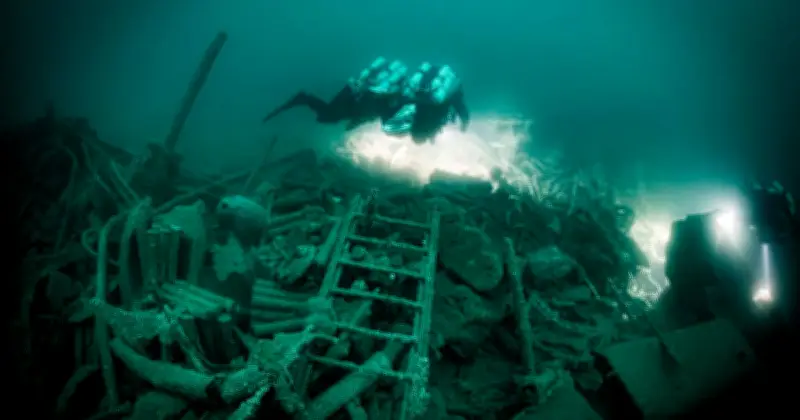
Remarkable new images show a Royal Navy shipwreck discovered off the Isle of Wight after 118 years. HMS Tiger sank in 1908 after straying into the path of another warship during a training exercise. Less than half of the torpedo boat destroyer’s 57-strong crew survived as the vessel was sliced in two.
Discovery after five-year search
The wreck was found by ProjectXplore, a group of divers and historians who spent five years working through archives to pinpoint HMS Tiger’s resting place. The ship had no time to take evasive action to avoid colliding with cruiser HMS Berwick during night manoeuvres.
A Navy spokesman said: “The tragedy made front page news, King Edward VII sent a telegram of sympathy and commemorative postcards were produced remembering the crew.”

Images of the wreck
Eerie images show divers inspecting the wreck, including the torpedo tube located on the bow of the ship and its bell. Other photos show where the vessel was cut in two, as well as a frozen-in-time shell room sign and ammunition. A wreath commemorating the lives lost when HMS Tiger sank was also laid on the shipwreck.
Leo Fielding and Dan McMullen, co-organisers of ProjectXplore, said in a statement: “It has been the privilege of a lifetime to research, discover and document the wreck of HMS Tiger. We sincerely hope that our work will ensure that HMS Tiger, her story and the memory of those connected with her endure for future generations.”
Government plans new protections
The discovery comes as the Government considers new powers to protect military shipwrecks. Under the new Armed Forces Bill, military shipwrecks would be safeguarded with a “protected place” designation once the remains had been found. The change in the law would expand existing safeguards under the Protection of Military Remains Act, which only cover vessels lost within the past 200 years.
Armed Forces Minister Louise Sandher-Jones said the protections will ensure lost sailors will get the “dignity and respect they deserve”. Lieutenant Commander Jen Smith, the Navy’s Deputy Fleet Wreck Officer, said protecting military shipwrecks helps to guarantee “they are preserved for future generations”.