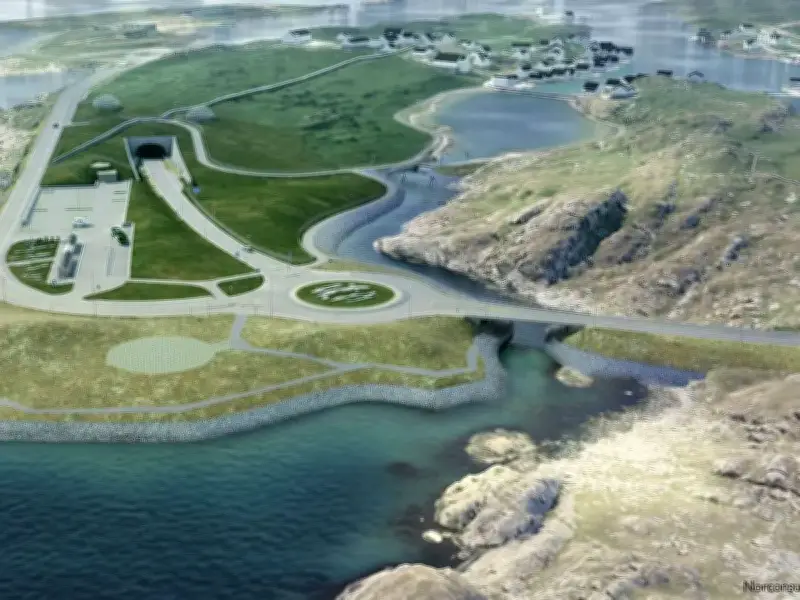
Construction is underway on the E39 Rogfast, a road tunnel that will become the world's longest and deepest undersea road tunnel, reaching 392 metres below sea level and cutting journey times between major cities by 40 minutes.
Record-breaking tunnel design
The 27-kilometre (17-mile) tunnel will form a key part of a ferry-free highway along Norway's western coastline, connecting Nord-Jæren and Haugalandet. Its name, Rogfast, is short for "Rogaland fastforbindelse," combining the regional name with the Norwegian term for "fixed link."
At its lowest point, the tunnel will descend 392 metres (1,286 feet) beneath sea level—83 metres deeper than the UK's tallest structure, the Shard. The depth is necessary because the fjords plunge 400 metres beneath sea level, compared with the English Channel's average depth of about 60 metres and maximum of 174 metres.
Transforming a challenging route
The E39 highway stretches 1,100 kilometres from Trondheim in the north to Kristiansand in the south. Currently, motorists must use nine separate ferry crossings to complete the route—more than any other single road in Europe—with the full journey taking approximately 21 hours.
The route has long been difficult. When the inaugural postal service along the coastline launched in 1647, postmaster Henrik Morian had to row across exposed fjords and then climb 1,500 metres on the opposite shore. Snow and ice frequently made whole sections impassable.
Safety and design features
Norconsult, the principal design and engineering firm behind Rogfast, said: "The tunnel project is groundbreaking in terms of tunnel length and includes the construction of a junction in the middle of the tunnel for the exit to Kvitsøy. The junction, featuring a roundabout within the tunnel, is located at an elevation of -250 m."
Given the tunnel's depth, distance and 7% incline—which increases the risk of engine burnout—fire is a significant concern. Emergency cross-passages will be placed every 250 metres, closer than the standard 330-metre spacing, allowing motorists to evacuate into the separate parallel tunnel within minutes if a fire occurs.
To address monotony, Norconsult said: "Inside the tunnel, an art project will be developed to prevent monotony, alleviate tunnel anxiety, shorten the perceived travel time, create a sense of orientation, and foster recognition. Additionally, the decoration will help 'open up' the tunnel space, and the use of dynamic lighting may lead to solutions that are adaptable and ever-changing."
Construction began in late 2021 after an unsuccessful attempt in 2018, with completion scheduled for 2033 at an estimated cost of around 25 billion Norwegian kroner (£1.97 billion).