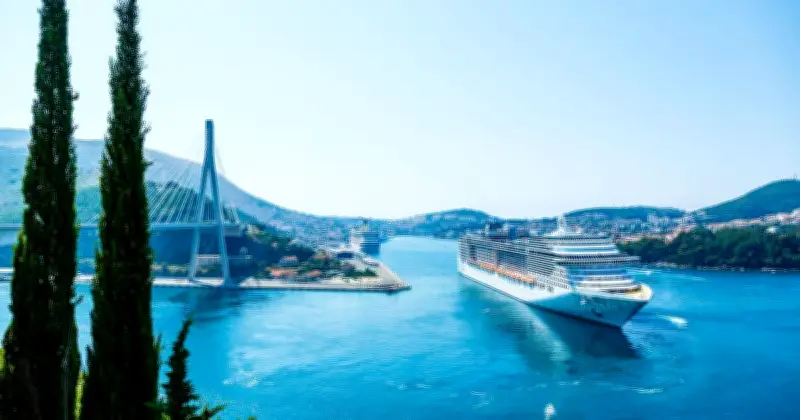
Dubrovnik, Croatia, once labelled Europe's most over-touristed city, has reversed its fortunes through strict cruise ship regulations, with its mayor declaring the local economy is now "10 times better" than when six liners docked simultaneously.
The medieval UNESCO World Heritage site, famed for its ancient city walls and Adriatic coastline, was routinely named on destination hit-lists a decade ago. Crushing summer crowds, gridlocked streets, and thousands of day-trippers arriving from cruise liners for just a few hours pushed local infrastructure to breaking point.
Three strict rules for cruise liners
City authorities imposed three rules on every visiting cruise ship: a maximum of two ships per day, a ceiling of 4,000 cruise tourists per day, and a mandatory minimum port stay of eight hours.

Mayor Mato Franković told the Express: "Today we have two cruise ships every single day. It used to be we had just Thursdays, Fridays and Saturdays, but we had six of them in the city at the same time, staying for four hours. And that was terrible."
The eight-hour minimum stay means vessels remain docked for nearly 10 hours, encouraging passengers to spend at local restaurants and shops rather than overwhelming infrastructure during brief stopovers.
Economy 'flourishing' from cruise ships
"The economy of the city is actually flourishing from the cruise ships now," the mayor added. "Perception of the locals is completely different because those people are now going into restaurants, they are taking excursions, going around [the city]."
Franković admitted the policy met fierce resistance when first proposed: "At the beginning, they were chasing me around and saying that I do not understand tourism and that I'm going to kill cruise tourism, that I hate cruise tourism. The truth was absolutely opposite. Our economy is now 10 times better than it was at the time when we had six cruise ships at the same time."
Next battleground: short-term rentals
Dubrovnik now targets short-term holiday rentals like Airbnb. Franković warned that uncontrolled rentals threaten the resident population, risking historic quarters becoming "ghost towns" in off-peak months.
"If we allow the next group of short-term rental apartments, we will kill all the apartments that used to be flats, living spaces. And the young people, the new generation, will lose the living space... Our cities will become summer cities or seasonal cities," he said.
The city council has drafted legislation, backed by research from the University of Dubrovnik, that will outright ban new permits in residential buildings.
"We have a strict decision that there will not be allowance of any more new short-term rental apartments," Franković revealed. "My personal belief is that [Europe] should definitely deliver a decision which will limit the number of short-term rentals, which will forbid the short-term rentals in living spaces." He added: "With [policies like] this, we could save many – not just European cities, many cities across the world – because all of us are having absolutely the same problem."