A Westminster policy group has warned that workers are being “left behind” as the government cracks down on retail crime, saying employers have an “absolute duty” to provide greater employee protection.
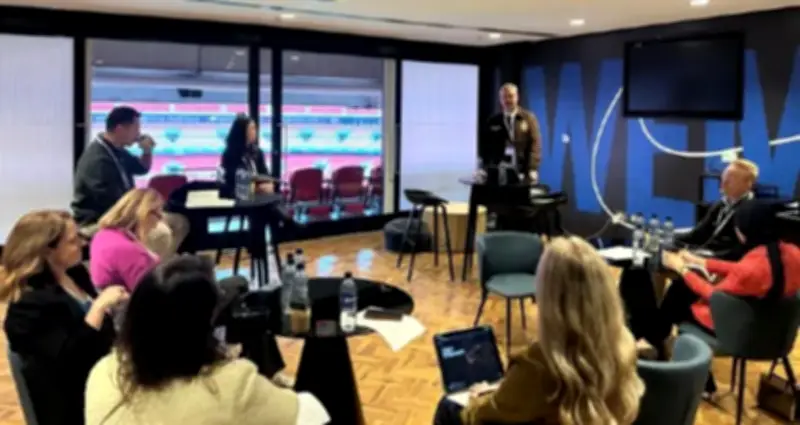
The conclusion was drawn from a Wembley Stadium roundtable during CX Vision Live 2035, which took place on Thursday 5 November. As Respect Week highlights abuse towards retail workers, leading wellbeing experts called for a rethink on how to protect customer-facing employees.
Key insights from the roundtable
Employees are often left to absorb workplace trauma without adequate recovery support. Employers must apply the same design discipline to psychological hazards as they do to physical safety. Customer-facing staff should actively co-design workplace policies, tools and training. Lower-paid workers are typically trapped between customer hostility at the counter and disciplinary action.
The discussion brought together workplace wellbeing and customer experience leaders from the UK, the US and the Gulf.
Scale of the problem
According to the British Retail Consortium, retail workers experience approximately 1,600 incidents of violence and abuse every day, more than three times pre-pandemic levels. Despite retailers investing an estimated £5bn in security measures over five years, participants questioned whether enough is being done to protect employees.
The discussion identified three priorities for employers and policymakers: invest in employees, not just security measures; design workplaces for psychological safety; and stop leaving employees to bear the consequences of corporate decisions.
Calls for a new approach
Gethin Nadin, chair of the PLG, questioned the imbalance in investment, arguing that “there’s an employee in the middle of this, and they’re not the person that’s being invested in.” He also asked, “If you were to prioritise psychological safety or mental health, how would you change the design of your organisation or the processes that you have in place?”
David Liddle, founder and CEO of The TCM Group, proposed: “I propose that retailers, trade associations, community safety partnerships, police forces, and restorative practitioners explore a new RISE (Retailers Investing in a Safer Environment) pilot. The ambition is clear: equip people to recognise risk, manage conflict safely, prevent harm where possible, and create communities in which everyone feels respected and protected. Safer shops can become a starting point for safer communities.”
Clemens Moehring, COO at Hastee, said: “When a retail worker experiences abuse, security deals with the incident and payroll deals with their pay. But who is looking at the connection between the two? Financial insecurity can make it harder for employees to report abuse, take time off to recover or even consider leaving an unsafe working environment. Financial wellbeing needs to be part of how employers prevent and respond to workplace violence.”
Industry and union response
The PLG will share its findings with parliamentarians and policymakers, calling for closer collaboration between government, employers and trade unions to protect employees before, during and after incidents of abuse.
Joanne Thomas, general secretary of Usdaw, commented: “Nobody should be afraid to go to work, so it is of grave concern that Usdaw’s latest survey findings show that 12% of retail workers were assaulted last year, with around three-quarters being abused or threatened. The government is making a difference with investment in police, but they need to bring into force the protection of shop workers law passed by Parliament in April. Usdaw works closely with retailers to make shops safer. Usdaw’s volunteer health and safety reps are regularly risk assessing workplaces and discussing mitigations with managers. We encourage retail employers who don’t currently engage with Usdaw to work with us to help make their workplaces safer.”
The Retail Trust commented: “Our country’s shop workers have had enough of being shouted at, threatened, and treated with contempt. We’re hearing from people who are frightened to come into work because they don’t know what they’ll face that day, and from others who have been pushed to breaking point by repeated abuse. Retail is one of the few places where millions of strangers still interact face-to-face and there has been a disturbing shift over the last few years where behaviour that would once have been considered completely unacceptable is increasingly being seen as part of the job. This is damaging people’s confidence, destroying morale and driving good people out of a sector they once loved. Most people do the right thing, but when a minority don’t, the rest of us have a role to play in making sure shop workers still feel seen and valued. No one should face abuse at work and respect can start with something as simple as looking someone in the eye, showing a little patience or simply saying, ‘hello.’”