Bradford's £75m low-carbon district heating network is now supplying heat to some of the city's most iconic landmarks, including the Grade I listed City Hall, and is set to capture waste heat from data centres to warm buildings, according to its backers.
How the network works
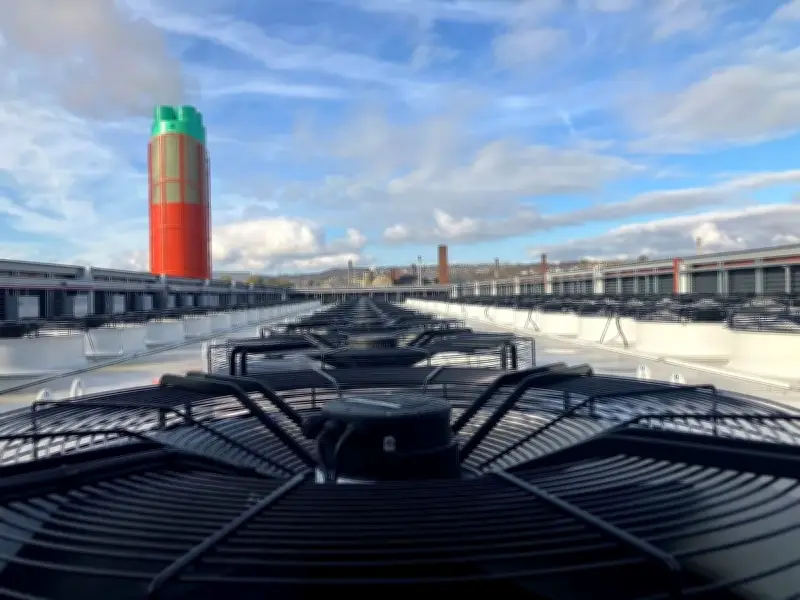
The scheme, run by 1Energy, uses large-scale low-carbon air source heat pumps to deliver heat and hot water to public buildings. Built on a former gas works site, the pumps draw warmth from outside air and use electricity to convert it into usable heat.
The heat travels through a three-mile network of underground pipes to customers, where heat exchangers transfer it to provide heating and hot water, removing the need for individual boilers.
Scale and current customers
The network generates enough heat to supply the equivalent of 10,000 homes from the 19th-century gas works site. It is already serving the city's council buildings, courts, University of Bradford and Bradford College.
1Energy said the network, funded through private and Government investment, would help customers reduce their dependence on gas, meet carbon reduction targets and cut the cost of replacing ageing boilers. It is also expected to reduce local air pollution and deliver wider public health benefits.
Future expansion with data centre heat
A data centre is due to be built on the site alongside the energy centre, with an arrangement to capture the substantial volumes of heat produced by data processing and channel it into the network.
John Hartley, chief executive of 1Energy, said: "For generations, this site supplied the gas that powered Bradford. Today, it begins a new chapter, providing low-carbon heat for some of the city's best-known buildings and putting Bradford at the forefront of modern energy infrastructure."
Hartley told the Press Association that the data centre could supply up to a third of the heat required for the network, cutting cooling costs for the scheme's developer and heating costs for 1Energy and its customers. While heat from the network was not necessarily more affordable than gas, it offered greater energy resilience, represented a cheaper route to decarbonisation than standalone heat pumps, and could deliver savings on replacing and maintaining gas infrastructure.
The University of Bradford has announced it will save tens of millions of pounds on replacing its ageing heating boilers by joining the network. Hartley said there were plans to expand the network to the hospital and additional customers, with discussions under way with developers about installing district heating for new-build homes.
1Energy is developing other heat networks in Milton Keynes, Oxford and Sunderland, where data centres could supply an even greater proportion of the required heat.
Andrew Judson, deputy leader of Bradford Council, said: "Bradford is showing other cities what can be done by delivering modern energy infrastructure that supports our regeneration ambitions and strengthens the city's offer to businesses and developers." He added: "By reducing reliance on imported gas and improving air quality, the network will bring lasting benefits for local people."
Minister for energy consumers Polly Billington said: "Ambitious projects like this one in Bradford, which will deliver low-cost, low-carbon heating to the community, are why we are investing in heat networks across England and Wales. We are building the infrastructure to reindustrialise the UK and rolling out cutting-edge energy technology so homes, businesses, public services and families can benefit from lower bills, good jobs and energy security."