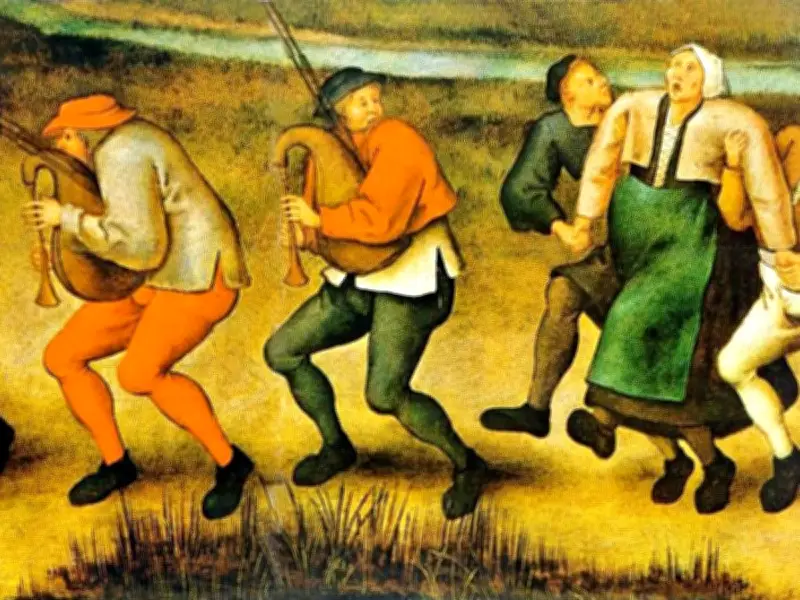
In July 1518, the residents of Strasbourg awoke to find bodies littering the streets. The victims had died from excessive dancing, a phenomenon that has puzzled historians for centuries.
The First Dance
On a hot summer day in July 1518, a woman named Mrs Troffea stepped into the street and began to dance. No music or celebration prompted the outburst. According to historical documents, she danced in silence, drawing a crowd of passers-by, including her husband. Within hours, others in the crowd became afflicted by the same impulse, and the streets filled with frenzied dancing. Dancers would stop briefly to sleep only to resume upon waking.
Authorities Step In
Strasbourg's leaders grew concerned and decided to organize special dancing events and galas, hoping to satisfy the dancers' urge. They sold tickets and brought in professional dancers to supervise. This only worsened the plague, spreading it to hundreds more. Dancers began dying from exhaustion and muscular distortion. Some accounts report up to 15 deaths per day. The plague finally ended in September, after two months of continuous dancing.

What Caused It
Scientists and historians debate the cause. One theory is ergot poisoning from contaminated rye bread, as ergot fungus grows in the Strasbourg area and can cause convulsions and visions. Another theory, proposed by US medical historian John Waller, is mass psychosis triggered by extreme stress from events like the Black Death.
Could a Dancing Plague Happen Now?
Yes, in theory. Mass psychosis and food contamination still occur in the 21st century. In 2011-2012, twenty people in Le Roy, New York, mostly teenage girls, developed tic-like movements and speech difficulties, drawing comparisons to the 1518 plague.
According to Kristina Grenz, Senior Cereal Product Quality Scientist at the Agriculture and Horticulture Development Board (AHDB), "We now know far more about ergot. By mitigating ergot risks in the field and in grain, combined with modern production practices, we have much greater ability to manage ergot than we did in the past. The ergot management interventions will need careful integration in production systems, especially to deal with competing objectives, such as the use of reduced tillage or ergot-susceptible grass species in field margins. The strengthened guidance will help farmers balance decisions in view of the risks and the opportunities."