Mortgage holders are facing the highest cash rate in 15 years, but interest rates are only half the story of how the economic picture has changed since they last reached these heights.
While indebted households bear the direct weight of Reserve Bank of Australia decisions, the broader cost-of-living squeeze is hitting everyday budgets through compounding price rises on just about everything.
From the supermarket checkout to the petrol pump, the way price increases ripple across the economy has shifted dramatically since 2011.
Sticker shock
There are some costs most people can’t avoid such as groceries and petrol, and they are hitting households hard.
The competition regulator found last year that between 2018 and late 2021, grocery prices increased largely in line with wages, before escalating quickly. By the end of 2022, grocery prices were increasing at more than twice the rate of wage growth.
There are different views on why this has occurred, but it is notable that Australia’s heavily concentrated supermarket sector, led by Coles and Woolworths, has consistently expanded profit margins during inflationary surges.
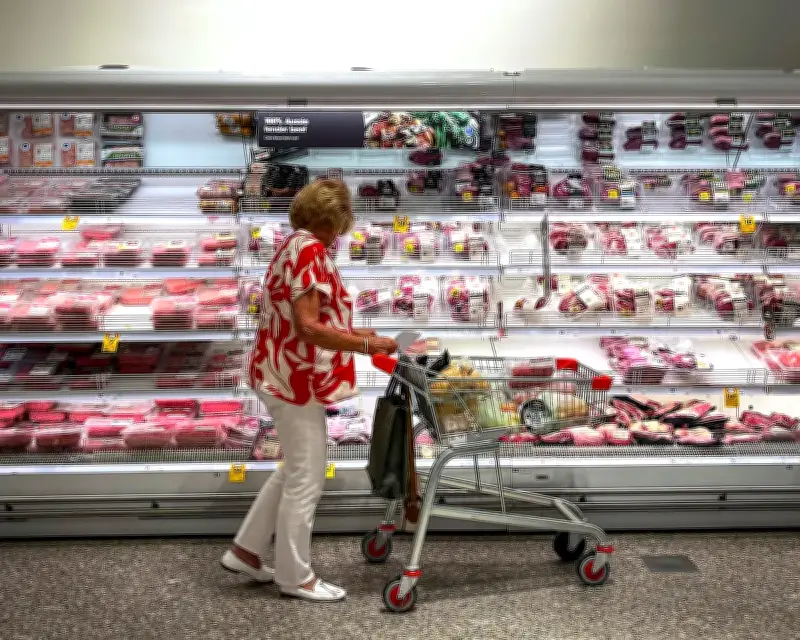
One of the fastest rising food prices has been beef, a kitchen staple for many Australian homes, with the relevant meat category up 95% since 2011, Australian Bureau of Statistics data shows. Wages rose 45% in total in that time.
Beef mince at Coles, for example, has more than doubled in price. A 2011 catalogue prices regular mince at $6 a kilogram. Today it costs about $15 a kilo.
The relentless price increases mean Australians have been living in a near constant state of “sticker shock” for the past five years.
Petrol and insurance costs
Petrol prices are another significant cost that has been an increasing burden.
In 2011, the average unleaded price over the course of the year was just under $1.50 a litre, according to the Australian Institute of Petroleum, which was considered high at the time.
They are now close to $2.40 a litre due to the US and Israel war on Iran, as well as fallout from the Russian invasion of Ukraine, and the related disruptions to global oil supplies.
AMP’s chief economist, Shane Oliver, has warned petrol prices could surpass $2.70 a litre in what would be an inflation trigger given high fuel prices drive up costs across most goods and services.
Another household cost, insurance premiums, has more than doubled since 2011, with the vast majority of that surge hitting policyholders since 2023, ABS data shows.
Insurers attribute the recent bump to higher costs for tradespeople and materials required to do the same work. As climate-charged disasters become increasingly common, more Australians have been left paying more for inferior coverage.
Mortgage pain
The RBA lifted the official cash rate to 4.6% on Tuesday, its highest level since 2011, and warned of further hikes as the enduring US war on Iran rattles the global economy.
Although the cash rate, which informs mortgage rates, has reached these levels before, property price rises have run far ahead of wage increases over the past 15 years, resulting in larger repayments.
In 2011, the average house price was about $487,000, according to Loan Market, compared to more than $912,000 in 2026.
Monthly repayments would have typically been a bit over $2,500 in 2011, almost half today’s level, according to the broker network.
One upside, however, is that mortgage rates are generally closer to the official cash rate than they used to be, according to Canstar analysis, because lenders are fighting harder for customers.
Canstar expects the average lowest variable mortgage rate to settle under 6.3% in response to the official cash rate rising to 4.6%.
When the cash rate was last near this level in late 2011, the typical low rate was close to 7%.
Changing habits
Sometimes, comparing prices of an item in 2011 to 2026 doesn’t tell the whole story because buying habits change.
Cinema ticket prices were about $13 in 2011, according to data from Screen Australia, and hovered around that mark for years. When venues sought to stay competitive against the rise of streaming platforms like Netflix – which launched in Australia in 2015 – movie prices effectively froze.
However, that strategy shifted during the pandemic when cinemas began leaning heavily into luxury offerings, such as recliners and in-seat catering, to lure viewers back to the big screen.
That upgrade came at a cost, with average ticket prices jumping by a third in just a few years to about $18.
Varis Desai, industry analyst at IBISWorld, says the pivot was designed to drive higher spending among affluent moviegoers, which has been successful at some premium venues.
Meanwhile, the change in the price of takeaway coffee varies widely according to location.
Almost 15 years ago, coffee prices were so high in Perth, the then BHP Billiton boss Marius Kloppers made media headlines when he complained about paying $5.50 for a takeaway.
Western Australia was at the tail end of the iron ore boom at the time, which had filtered through the state economy, driving up wages and inflating operating costs for everyday businesses.
The boom subsided, and prices started to normalise, making it possible to still find a $5.50 coffee in Perth 15 years later, although it’s probably a smaller size and not from a specialty roaster.