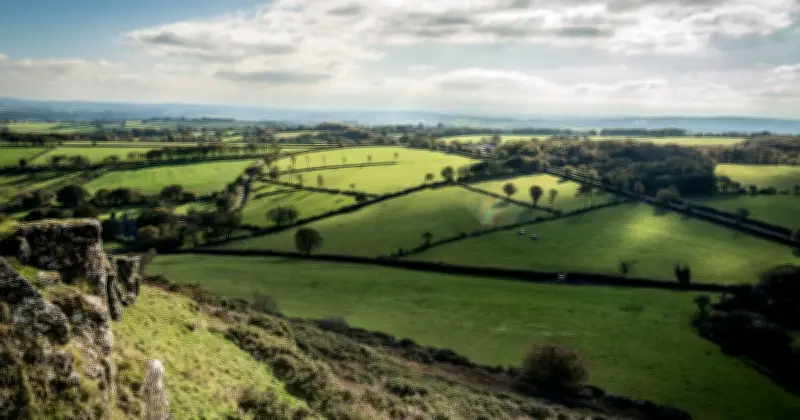
The Government has been warned that a romanticised view of the British countryside could turn it into a "museum" and stunt economic growth, with less than 10% of the public seeing it as a place of business.
A survey commissioned by the Country Land and Business Association (CLA) and carried out by More in Common, polling over 2,500 people, found that 67% see the countryside primarily as a place for nature and wildlife, compared with just 9% who see it as a place of business.
Rural firms at risk of becoming 'smiling waxworks'
The CLA argues that a romanticised view of the countryside, with its "interesting walks", "fresh air" and "havens to escape to", makes it harder for businesses based there to grow. The organisation warned that firms in rural Britain could be reduced to "smiling waxworks" rather than a source of economic activity.
CLA President Gavin Lane said: "Britain loves its countryside but sometimes forgets people must make a living in it. Behind the rolling hills and picture-postcard villages are farmers running businesses, employing local people and putting food on our tables."
He added: "We don't want to be smiling waxworks in a rural museum, preserved for visitors to admire. We are entrepreneurs who want to grow, create jobs and build businesses Britain can be proud of."
Public unaware of food production and land use
Mr Lane suggested people think of the countryside as "something frozen in time", leading them to "forget what it takes to keep it alive". He called for "affordable homes for young families, a planning system that allows rural businesses to grow, and the confidence to invest in our future, without tax bills that stunt ambition".
The polling also found that less than a quarter of Brits know that the majority of their food is produced in Britain, while just 3% can correctly identify that 70% of the country's land mass is used for agriculture.
Despite these perceptions, more than three-quarters of respondents had a positive overall view of farmers, with the most popular terms used to describe those living in the countryside including "resilient", "hard-working" and "community-minded".
Public backs UK food production and opposes farm tax
Eight in ten people surveyed said there should be a greater focus on producing food in the UK, even if it's more expensive for consumers. Over 50% opposed Labour's Family Farm Tax, which could force farmers to sell land that has been in their family for generations.
James Farrell, head of rural consultancy at Knight Frank, warned that public affection for the countryside "will not secure its future". He said: "The landscapes we cherish depend on the work and investment of farming families and rural enterprises, whose economic contribution deserves recognition alongside their stewardship of the land."
"This research reveals strong public support, which Government must match with a clear commitment to rural enterprise," Mr Farrell added. "These businesses underpin our food security, deliver solutions to some of society's biggest issues and support livelihoods far beyond their local communities. They deserve a central place in the country's growth plans, backed by policies that enable them to invest and expand."