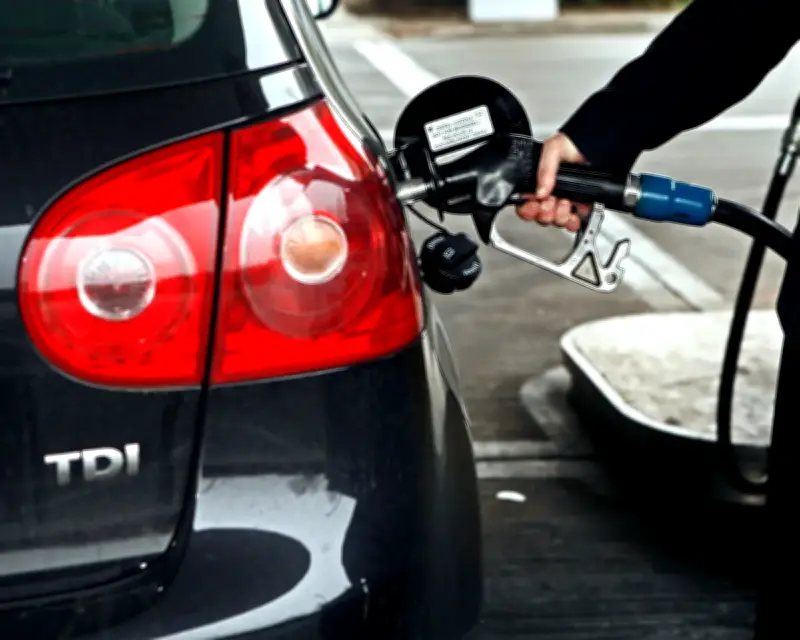
The average price of diesel at UK forecourts has climbed to a record £2 a litre, adding further pressure on motorists. The RAC motoring group said on Friday that the average price had reached 200.01p a litre, meaning the cost of filling up an average family car is now £110, nearly £32 more than before the US-Israel war on Iran began.
Record prices and rising costs
The price of a litre has risen 40.5% since late February, when the conflict began disrupting supplies of crude and refined oil products from the Gulf, leading to cost increases across the economy. In reality, many forecourts have been selling diesel above £2 a litre for some time.
Simon Williams, the head of policy at the RAC, said: “This is a pump price threshold that no one wanted to cross.” He added: “This will be very challenging for households and companies that drive a lot of miles, from commuters, haulage and delivery firms, businesses with large fleets all the way through to sole traders.”
Government and international response
Earlier on Friday, the transport minister Keir Mather sought to avert panic at the pumps, insisting the UK was not facing a diesel shortage, after Donald Trump threatened to cut off US supplies of the fuel. The Trump administration has told Germany and France to release their diesel stockpiles to help ease soaring global energy prices or face a US export ban.
On Thursday, the UK opened talks with European allies over releasing emergency supplies. Dan Jørgensen, the EU commissioner for energy, said on Friday that Europe was discussing the diesel reserves issue with all members of the International Energy Agency (IEA), not only the US. In a video conference with G7 leaders chaired by the French president, Emmanuel Macron, attenders discussed a proposal from the French government that European nations release 50m barrels of diesel from reserve supplies, and for members of the IEA to release 50m barrels of crude oil, Reuters reported.
Impact on households and economy
Petrol prices are also continuing to rise, with a litre of unleaded costing 174.1p on average, a 31.5% increase since 28 February, taking the cost of a typical tank to £96, just over £23 more than before the conflict. The UK relies on the US for about 30% of its diesel, with the vast majority coming from mainland Europe, and has reserve supplies for 42 days.
Capital Economics estimated that a ban on US exports of diesel could raise UK diesel prices from £2 a litre to £3 a litre and push inflation up to 5%, from 3.1% in August. The Middle East war has also pushed up household energy bills. This week the quarterly price cap rose by 4%, meaning a typical household in Great Britain will pay £1,723 a year. The cap is forecast to increase by a further 16%, equivalent to adding £276 to the average annual dual-fuel bill, to take it to £1,999, according to the leading forecaster Cornwall Insight.
Reports of talks among European nations to potentially release diesel and oil reserves fuelled a 2.5% fall in the price of Brent crude to $99.78 a barrel. “This highlights that the main stress in the energy market is no longer crude availability, with Middle East flows recovering,” said Ole Hansen, the head of commodity strategy at Saxo Bank. “But rather refined product supply, constrained by reduced refinery capacity and output across the Middle East and Russia.”