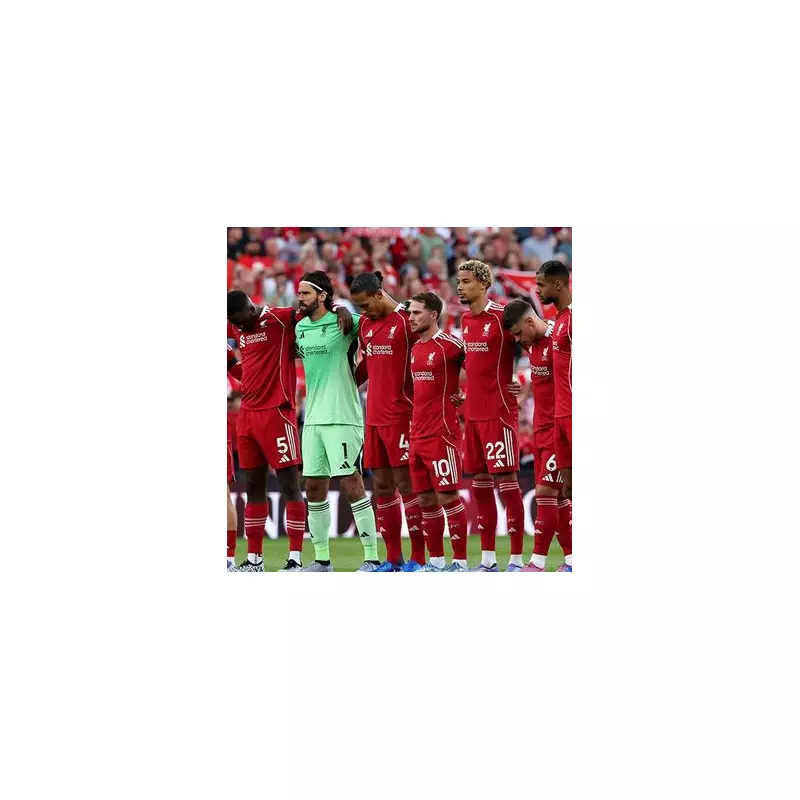
The collapse appears inexplicable on paper. Liverpool FC, the team that celebrated lifting the Premier League trophy amidst scenes of pure elation in May, is now enduring its worst losing streak since the 1950s. Pundits remain baffled, supporters grow increasingly frustrated, and manager Arne Slot faces intensifying scrutiny about his capacity to lead. Yet within the private confines of the AXA Training Centre, the root cause isn't tactical naivety, physical decline, or a sudden loss of skill.
Six months after the devastating death of Diogo Jota, the emotional dam has finally burst. In the high-stakes world of professional football, where players are conditioned to 'dust themselves off' and perform, Liverpool's squad is discovering a brutal truth: grief cannot be outrun. Experts now believe the team is suffering from a profound, collective trauma that has gone largely unaddressed.
The Elephant in the Dressing Room
While league tables depict a team in alarming freefall, specialists in bereavement suggest the players are grappling with a shared sorrow that has become the 'elephant in the room' this season. "The most significant loss they are confronting has been largely ignored in the rush to commence a new campaign," explains Maria Bailey, founder of Grief Specialists.
"Consecutive defeats would damage any professional footballer's confidence... but grief does not conclude after the funeral. It isn't solely the immediate family who mourn. Grief doesn't simply vanish because you're at work."
The psychological toll is manifesting in the team's most dependable figures. Mohamed Salah, typically a model of consistency, is committing uncharacteristic errors. Captain Virgil van Dijk, the defensive cornerstone, appears uncharacteristically uncertain. The situation was laid bare this week by Andy Robertson. After Scotland achieved a career pinnacle by qualifying for the World Cup, the defender confessed he felt "in bits," overwhelmed not by joy, but by the persistent memory of Diogo Jota.
A Captain's Intervention and Psychological Toll
The desperation to rectify the team's issues recently led to extraordinary scenes, with captain Virgil van Dijk convening "crunch talks" at the training ground. In a significant move, manager Arne Slot and his coaching staff were explicitly excluded from these discussions.
However, these talks failed to produce an upturn in fortunes. According to Chartered Counselling Psychologist Dr Jane Halsall, this is because the core issue is not football-related, but psychological. "Grief impacts athletes in profound ways: it disrupts concentration, decision-making, energy levels, and emotional regulation," Dr Halsall clarifies. "Some players may experience shock, profound sadness, or guilt... These are normal human reactions, but they inevitably impair performance."
Complicating the recovery is a divided squad dynamic. The summer transfer window introduced new signings to Anfield—players who never knew Jota and are now attempting to integrate. "I can only imagine their position," says Bailey. "They are outsiders to this shared loss, which could be compounding their own performance challenges, all while trying to mesh with an established team of champions who are navigating this immense void."
The Manager Under Fire and a Club's Healing Process
Caught at the centre of this emotional maelstrom is manager Arne Slot. Hired to spearhead a title defence, he has instead found himself managing a collective bereavement. The strain is becoming visibly apparent.
Body language expert Judi James analysed Slot's recent media appearances, describing a man who increasingly resembles a "disappointed and puzzled fan" rather than a commanding leader. "The word 'solutions' itself seems to trigger a reflective and low emotional state here," James notes. "There is an 'Ahhh...' followed by a sigh and a shrug. A sigh suggests hopelessness, and a shrug can appear dismissive."
Amid the slump, a public symbol of the club's struggle persists: the 20-minute tribute during every match, where fans passionately sing Jota's song. As results have deteriorated, some voices have called for the ritual to end, arguing it prevents emotional closure. Maria Bailey strongly disagrees. "Abandoning this gesture might superficially seem correct, [but] those players are thinking about him regardless," she contends. "Hearing his song may offer a degree of comfort rather than provoke distress."
The consensus among experts is unequivocal: Liverpool cannot simply train their way out of this crisis. The path forward requires confronting the trauma directly. "I would encourage the club to provide group sessions... where the team can openly share their true feelings in a secure environment," advises Bailey. "Those who grieve need to be heard, not fixed."
Dr Halsall adds that supporters have a vital role to play in the healing. "Fans must recognise that this is a moment when the team needs loyal, unconditional support rather than 'glory-only' reactions... No player should feel any shame for grieving."