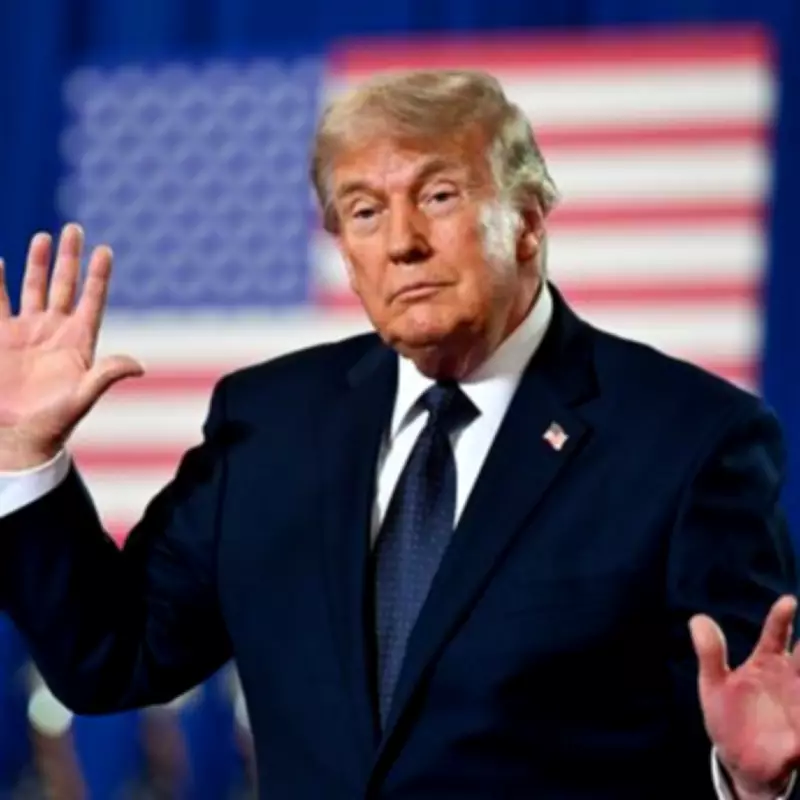
Donald Trump is facing serious questions as his Iran deal remains unratified, with members of his own party expressing concern over the emerging terms. The US president boasted yesterday that the “final aspects and details” of a deal are “currently being discussed,” but as details emerge, there is mounting criticism from within Trump’s own Republican party, including Texas Senator Ted Cruz.
Cruz Voices Deep Concern
Cruz said he was “deeply concerned” by the terms of the emerging deal. His concern prompted a response from outside Trump adviser Alex Brusewitz, who jibed, “Cool, Ted. No one asked you, bro.” Cruz retorted, “Hush, child. The adults are talking. I’m not your ‘bro.’ And young political grifters pushing Iran appeasement are not remotely helping the President.” Brusewitz later called Cruz a “clown” in a separate post, accusing him of positioning for the 2028 election and using the deal as a wedge against Trump’s candidate.
Potential Deal Terms
Under the potential deal, Tehran would agree to give up its stockpile of highly enriched uranium, according to regional officials speaking on condition of anonymity. The Strait of Hormuz, a vital artery for global oil supplies that has been effectively closed by Iran since the war began, would gradually reopen. Experts say it would take several weeks or even months for shipping and prices to recover to prewar levels. Iran has not publicly committed to giving up its uranium, a key Trump demand, and the sides previously seemed close to a deal in recent weeks.

Negotiations Progress
“The negotiations are proceeding in an orderly and constructive manner, and I have informed my representatives not to rush into a deal in that time is on our side,” Trump said in a social media post. US Secretary of State Marco Rubio, on a visit to India, said that “significant progress, although not final progress, has been made” in the negotiations, and that the world would no longer need to fear Iran getting a nuclear weapon, without elaborating.
Iran’s embassy in India responded to Mr Rubio on social media, saying Tehran has an “inalienable” right to nuclear technology. Iran has always insisted its programme is peaceful while enriching uranium to near weapons-grade levels. Iran’s President Masoud Pezeshkian told state TV they were ready “to assure the world that we are not after a nuclear weapon.”
Domestic and International Reactions
The final form any deal is agreed could raise questions over the Trump administration’s decision to embark on military action in Iran. With the global economy hurting following the closure of the strait and clear tensions between the US and its allies over their refusal to join military action, as well as Trump’s campaign promises to end the war, the aftermath is likely to depend on how news of the deal is digested domestically and abroad.
Under the potential deal, Tehran would agree to give up its stockpile of highly enriched uranium, according to the two regional officials. One official said how Iran would give up its highly enriched uranium would be subject to further talks during a 60-day period. Some would likely be diluted, while the rest would be transferred to a third country, potentially Russia. Russia has offered to take it.
Iran has 440.9 kilograms (972 pounds) of uranium enriched up to 60% purity, a short technical step from weapons-grade levels of 90%, according to the International Atomic Energy Agency. Iran said the peaceful use of nuclear science and technology is a legitimate right that it “will never relinquish,” according to its embassy in India.
Broader Implications
Trump has sought greater concessions from Iran than those required under a 2015 Obama-era agreement that the US later withdrew from under Trump. On Saturday, Iranian Foreign Ministry spokesman Esmail Baghaei told the state-run news agency that there are “narrowing differences” between the Iranian and US positions, but that Iran is cautious after being attacked twice in the past year during nuclear negotiations. Pakistani army chief Asim Munir, a key mediator, left Tehran late on Saturday after more talks with Iranian officials.

Under the emerging agreement, the Strait of Hormuz would gradually reopen in parallel with the US ending its blockade of Iran’s ports, the officials said. The US would allow Iran to sell its oil through sanctions waivers, said the second official. Sanctions relief and the release of Iran’s frozen funds would be negotiated during the 60-day time frame. Both officials said the draft deal includes an end of the war between Israel and the Iran-backed Hezbollah militant group in Lebanon, as well as a commitment to not interfere in the domestic affairs of countries in the region.
Regional Dynamics
Twelve weeks have passed since the US and Israel attacked Iran, killing its supreme leader and other top officials. A ceasefire with Iran has held since April 7, though the sides have exchanged fire on occasion. Several countries, including the European Union, welcomed progress on a possible deal with Iran. Prime Minister Benjamin Netanyahu warned Trump that Israel maintains freedom of action against threats in all arenas, including Lebanon, according to an official familiar with the conversation.
The official said Trump made it clear to Netanyahu that he would not sign any final agreement without the conditions that Iran dismantle its entire nuclear programme and give up all its enriched uranium. Netanyahu, in a social media post on Sunday, said: “President Trump and I agreed that any final agreement with Iran must eliminate the nuclear danger” and that Trump had reaffirmed Israel’s right to defend itself “on every front, including Lebanon.”
Israel’s science minister Gila Gamliel, a member of Netanyahu’s Likud party and part of his national security cabinet, told Israel’s Army Radio that Israel is taking a “wait-and-see” approach. Israeli officials are concerned that Hezbollah remains a serious threat to Israel and that Lebanon is ill-equipped to disarm it. A fragile, US-brokered ceasefire took effect in Lebanon on April 17, but fighting has continued, mainly in the south. Hezbollah has launched daily drone and rocket attacks on Israeli forces and northern Israel, and Israel has struck targets across Lebanon while its troops remain in large swathes of the south. More than 3,000 people have been killed in the latest round of fighting, according to the Lebanese Health Ministry. Additionally, 22 Israeli soldiers and a defence contractor have been killed in or near southern Lebanon, and two civilians have been killed in northern Israel, according to Netanyahu’s office.