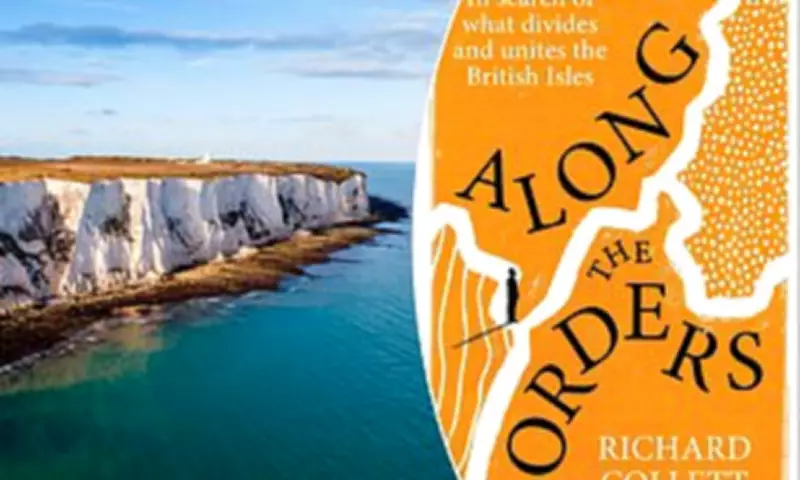
In Along The Borders, travel journalist Richard Collett embarks on a journey along Britain's internal and external borders, uncovering their origins and contemporary relevance. The exploration includes surprising discoveries, such as the River Tamar, which separates England from Cornwall—or Kernow, as Cornishmen call it. This river is described as 'one of the world's oldest national boundaries,' dating back to 936 AD when Athelstan, the first king of all England, established his western frontier there. A local resident insists that Cornwall is not merely a county but a duchy, highlighting the contentious nature of this border.
The Highland-Lowland Divide
Another hidden yet deep-rooted line is the geological fault across Scotland that divides the Highlands from the Lowlands. Formed 'in stone cold fury 450 million years ago,' this fault arguably marks as significant a separation as the Anglo-Scottish border. Historically, Highlanders referred to the land south of this line as the Galltachd, meaning 'the land of the foreigners.'
Shetland's Norse Identity
In Shetland, residents express that Edinburgh feels almost as distant as London. Geographically, Shetland is much closer to the Norwegian coast than to the Scottish capital. 'We never had kilts or bagpipes here!' one local remarks. With place names like Lerwick and Muckle Flugga, the islands' Norse heritage is unmistakable.

Language serves as a key marker of difference. Cornish is increasingly spoken again in Cornwall, Scots Gaelic persists in Scotland, and Welsh is taught in all Welsh schools. The author admits to feeling a thrill when crossing the Severn Bridge and seeing the sign with the Red Dragon and the words 'Croeso i Gymru!' (Welcome to Wales!). If borders represent local pride and colourful difference, he is all for them.
However, in Northern Ireland during the Troubles, borders meant death. Collett recalls horrors like the Kingsmill Massacre, where Protestant workmen were forced off a bus and machine-gunned by the roadside. It is hard to believe this happened in the UK just 50 years ago.
Contested Borders: The Kent Coast
Today, perhaps the most contested border is the Kent coast. Collett insists that those arriving in small boats are refugees, prompting the question: what are they fleeing from in France? Here, his own views intrude. In Folkestone, he speaks to Bridget, a 'spiky-haired Londoner' who works for the Kent Refugee Action Network. She dismisses anyone concerned about the boats as 'unemployed nutters.' Bridget herself left London (white British population 37 per cent) for Folkestone (white population 92 per cent) due to 'property prices.' Much remains unexplored here.
Collett is troubled by the natural human tendency to self-segregate, to cluster among one's own people. In Leicester, he finds multiple divisions and borders. A local explains: Beaumont Leys is white, St Matthew's is Somalian, Belgrave Road is Hindu, and Spinney Hills is Muslim. All fine and vibrant when everyone gets along, but in the summer of 2022, Leicester's Hindus and Muslims attacked each other in the streets, resulting in many injuries and subsequent arrests.
Collett suggests a greater need for community integration, but he seems well-meaning yet sometimes self-contradictory, failing to ask hard questions. Might the rapid ethnic diversification of a formerly homogeneous country risk causing more tension and violence? Nonetheless, Collett has travelled widely across the UK, talked to numerous people, and is an engaging writer and excellent listener. It is precisely because his book provokes such questions and debates that it is so timely and interesting.