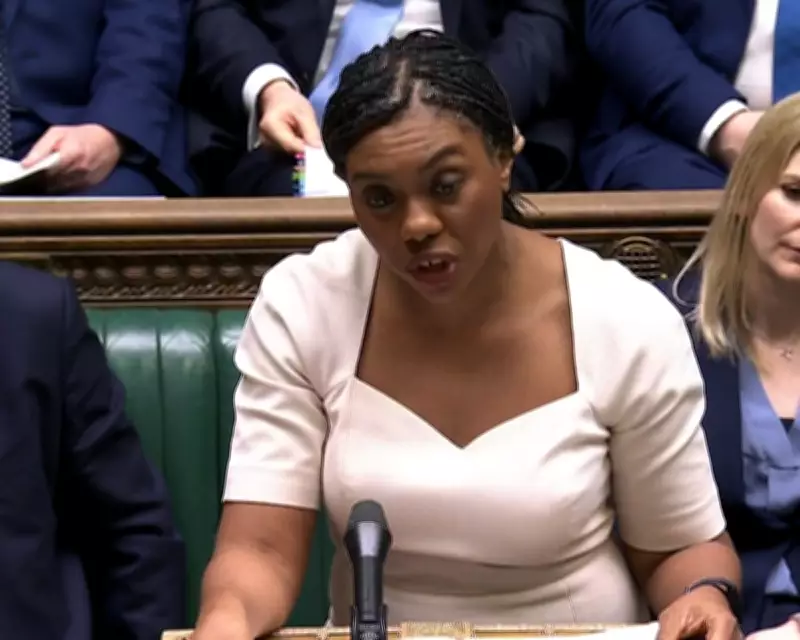
Conservative leader Kemi Badenoch is turning to an obscure parliamentary mechanism in a bid to force the government into disclosing sensitive documents related to the appointment of Peter Mandelson as Britain's ambassador to the United States. The move involves a humble address, a rarely used procedure that aims to extract papers from government departments.
What Is a Humble Address and How Does It Work?
A humble address is a motion that can be tabled by opposition parties on days allocated for non-government business in the House of Commons. Officially framed as a petition to the monarch, it serves as a tool to compel the release of documents, such as those held by secretaries of state. The motion is subject to debate, amendment, and a vote, much like any other parliamentary proposal.
In this instance, Badenoch seeks the publication of due diligence work conducted by the Cabinet Office and emails exchanged between Mandelson and Morgan McSweeney, an ally of Mandelson who now serves as chief of staff at Number 10. The government has responded with an amendment stipulating that all documents should be released, barring those that could jeopardise UK national security or international relations.
The Historical Context of Humble Addresses
Humble addresses have a long but infrequent history in British politics, dating back to 1715 during the first parliament of George I. They were initially employed to address perceived national security threats. Over the centuries, notable figures like liberal philosopher John Stuart Mill utilised them in campaigns, such as the push for women's suffrage in 1866.
In recent years, however, the procedure has seen a resurgence, often weaponised by opposition parties to bypass conventional channels and secure the release of contentious documents. This shift has sparked debate over its ceremonial origins versus its modern political applications.
Recent Precedents and Political Implications
A pivotal moment occurred in 2017 when the Conservative-led government was forced to share confidential economic impact assessments of Brexit after Labour deployed a humble address. This move drew criticism for potentially involving the monarchy in political disputes, yet it set a precedent for future use.
Subsequent years saw humble addresses employed again in 2018 and 2019, primarily for Brexit-related matters. More recently, in 2022, Keir Starmer, then Labour leader, used one to compel the publication of security advice concerning Evgeny Lebedev's peerage, embarrassing the government by garnering support from Tory rebels.
Are Humble Addresses Binding on the Government?
The enforceability of humble addresses has been a topic of parliamentary discussion. Keir Starmer, during his time as shadow Brexit secretary, asserted in a 2017 debate that such motions are binding. Former Tory MP Jacob Rees-Mogg noted that while Erskine May, the parliamentary guide, avoids the term "binding," it acknowledges the power of MPs to call for papers through motions for a return.
Then-Speaker John Bercow reinforced this view, stating that these motions have traditionally been regarded as effective and binding. Failure to comply with a passed motion could lead to the government being held in contempt of parliament, adding significant weight to the procedure.
As the Conservatives now find themselves in opposition, they are adopting a tactic once criticised by their own party, highlighting the evolving dynamics of parliamentary strategy in Westminster.