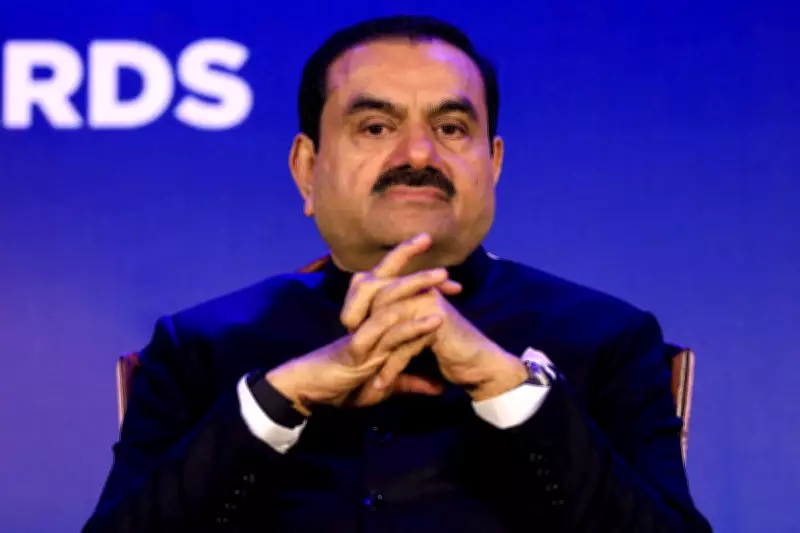
The United States Department of Justice has moved to drop criminal charges against Indian billionaire Gautam Adani, who was accused of orchestrating a major bribery and fraud scheme to secure solar energy contracts. The decision follows a settlement of $18 million and comes after Mr Adani committed to invest $10 billion in the US and create 15,000 jobs.
DOJ cites prosecutorial discretion
The DOJ informed Judge Nicholas Garaufis at the US District Court in the Eastern District of New York that it had decided, in its prosecutorial discretion, not to devote further resources to these criminal charges against individual defendants. The request still requires judicial approval. The decision follows months of negotiations involving senior prosecutors in New York and Mr Adani’s legal team and associates.
Parallel resolutions with US financial regulators have also effectively closed multiple investigations into the Adani Group’s overseas dealings. On Monday, the Department of the Treasury announced a $275 million settlement with Adani Enterprises over alleged violations of Iran-related sanctions. Last week, the Securities and Exchange Commission concluded a civil case after Mr Adani agreed to pay a penalty without admitting wrongdoing. The SEC stated that if approved by the court, it would order Gautam Adani and Sagar Adani to pay civil monetary penalties of $6 million and $12 million respectively.

Allegations of a $265m bribery scheme
At the centre of the case were allegations that Mr Adani and his co-defendants engineered a $265 million bribery scheme to secure solar energy contracts from Indian officials while misleading American investors during fundraising efforts. The indictment, filed in 2024, included charges of securities and wire fraud conspiracy. American prosecutors had initially described Mr Adani’s conduct as an “elaborate” scheme involving “corruption and fraud at the expense of US investors”.
According to the New York Times, the turnaround followed Mr Adani’s appointment of a new legal team led by Robert J Giuffra Jr, co-chair of the law firm Sullivan & Cromwell and personal lawyer to President Donald Trump. Although prosecutors informed Mr Giuffra that Mr Adani’s proposed $10 billion investment would not influence the criminal case’s outcome, the idea was met positively by at least one senior DOJ official during discussions.
Defence arguments on jurisdiction
The DOJ brought the case when Joe Biden was US president. Breon Peace, US Attorney for the Eastern District of New York, stated at the time that the defendants orchestrated an elaborate scheme to bribe Indian government officials to secure contracts worth billions of dollars and lied about the bribery scheme while raising capital from US and international investors. Prosecutors alleged that Mr Adani and his associates misled American investors about anti-corruption compliance practices and raised more than $3 billion.
Defence arguments focused heavily on jurisdiction and the framing of the allegations. Mr Adani’s lawyers argued that the matter represented an overreach of US law as it involved Indian defendants, an Indian issuer, and securities not traded on US markets. They contended that all alleged conduct occurred exclusively in India. Furthermore, they argued that prosecutors failed to establish key elements of fraud, including investor harm, noting that there were no investor losses and bond obligations had been fully honoured.
Adani Group consistently denied wrongdoing throughout the proceedings, maintaining that its conduct complied with applicable laws and regulations.