

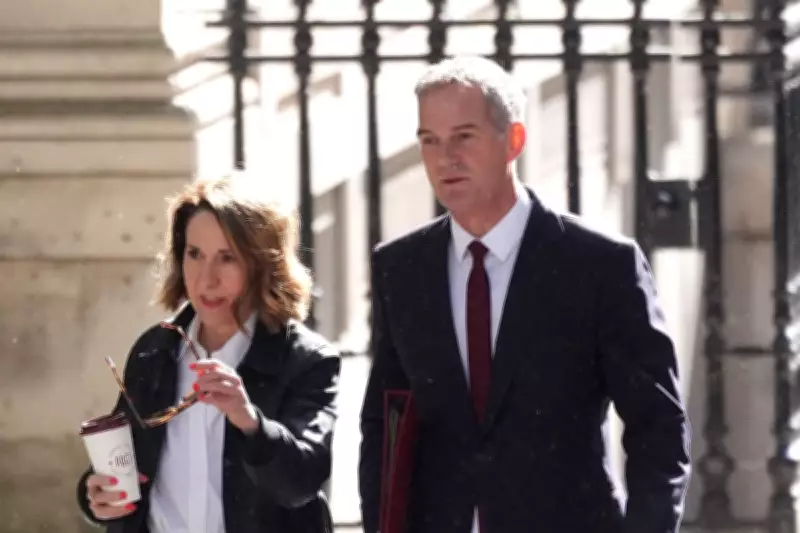
Cabinet ministers have expressed their support for Sir Keir Starmer after the Prime Minister vowed to continue leading the government despite mounting calls for his resignation. Following a Cabinet meeting on Tuesday, several senior figures publicly backed the embattled Labour leader, while others remained silent, highlighting divisions within his top team.
Public Show of Support
Technology Secretary Liz Kendall, Business Secretary Peter Kyle, Work and Pensions Secretary Pat McFadden, and Housing Secretary Steve Reed all voiced their backing for Starmer as they faced the media outside Downing Street. McFadden stated that no one had publicly challenged Starmer to step down and that the government should “carry on.” Kendall affirmed, “This Government will do what we were elected to do, which is serve the British people. The Prime Minister has my full support.” Kyle praised Starmer’s “really steadfast leadership,” while Reed confirmed he had the Prime Minister’s “full support.”
Silent Dissent
However, other Cabinet ministers, including those reportedly urging Starmer to quit, avoided speaking to reporters after the meeting. Defence Secretary John Healey took to social media to reiterate his support, warning that “more instability is not in Britain’s interest.” Health Secretary Wes Streeting, a potential successor, ignored journalists’ questions as he left Number 10. At least 79 of Labour’s 403 MPs have now called for Starmer to stand down following the party’s poor election results last week.

Starmer has resisted calls to resign, despite the first ministerial resignation from his government and growing pressure from Labour MPs to set a departure timetable. According to Downing Street, he told his Cabinet: “I take responsibility for these election results and for delivering the change we promised. The past 48 hours have been destabilising for government and that has a real economic cost. The Labour Party has a process for challenging a leader, and that has not been triggered. The country expects us to get on with governing.”
Deepening Crisis
Starmer’s position was further weakened just before the Cabinet meeting when Housing, Communities and Local Government Minister Miatta Fahnbulleh urged him “to do the right thing for the country and the party and set a timetable for an orderly transition,” citing lost public trust over issues like scrapping the winter fuel payment. Fahnbulleh is considered a close ally of Energy Secretary Ed Miliband, who reportedly privately advised Starmer to consider stepping down last week. Home Secretary Shabana Mahmood and Foreign Secretary Yvette Cooper are also said to have had similar conversations with him.
Earlier on Tuesday, one of Starmer’s closest aides, Cabinet Minister Darren Jones, declined to confirm whether Starmer would lead the party into the next general election, stating, “I’m not going to get ahead of any decision the PM may or may not take.” The political uncertainty has had economic repercussions, with the cost of long-term government borrowing surging to a fresh 28-year high and the pound weakening, though markets stabilised slightly after the public show of support. Chancellor Rachel Reeves also pulled out of a scheduled speaking event in the City of London on Tuesday morning.






