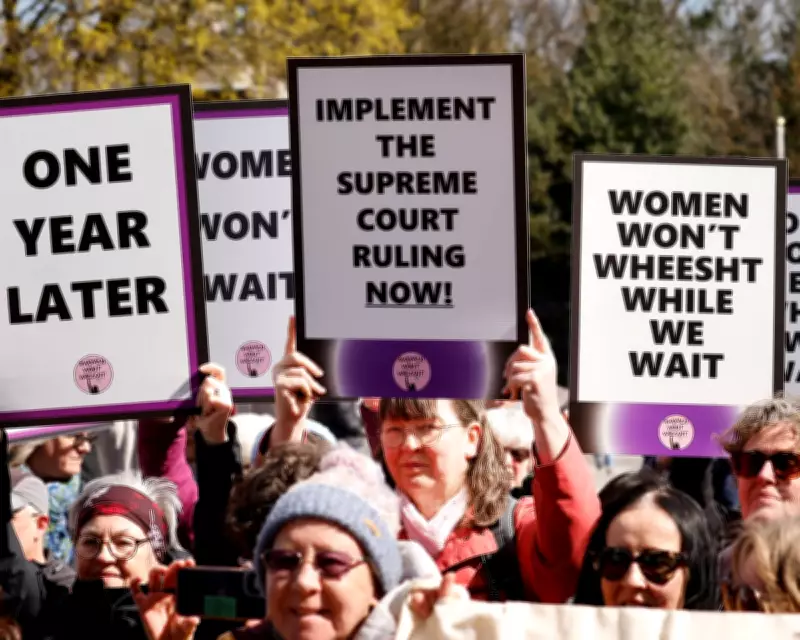
For Women Scotland has criticised how long it has taken for the EHRC’s guidance to be implemented. Single-sex toilets must exclude transgender people, says the Equality and Human Rights Commission (EHRC) in an updated code of practice covering England, Wales and Scotland, following a landmark Supreme Court ruling.
What is the updated EHRC code of practice about and how does it apply?
Single-sex toilets and changing rooms in England, Wales and Scotland must exclude transgender men and women, according to a new code of practice from the equalities watchdog. However, the long-awaited guidance also states that businesses and service providers must offer practical alternatives, such as gender-neutral toilets, for individuals who do not wish to use facilities designated for their biological sex.
The EHRC document outlines how public bodies, businesses, and other service providers should respond in practical terms to the April 2025 Supreme Court ruling that sex in the Equality Act refers only to biological sex. The guidance is seen as an incremental victory for gender-critical campaigners, who have long argued that trans women should be excluded from women-only services. Critics, however, fear it will entrench a chilling effect, causing trans people to avoid public spaces altogether.

Trans advocacy groups had hoped that amendments made by the EHRC in April, following government feedback, consultation responses, and additional legal advice, might result in a less blanket exclusion. The guidance does suggest that clubs and associations can remain trans inclusive by opening themselves to multiple protected characteristics simultaneously, for example, women or men and trans people.
In healthcare settings where mixed-sex accommodation is unavailable, trans patients must be placed on the single-sex ward corresponding to their biological sex. However, the code also states that it would not be proportionate to exclude a trans man from obstetrics and gynaecology outpatient services based solely on objections from female patients.
The government’s equality impact assessment accompanying the updated code acknowledges that the likely impact on transgender people is negative but highlights mitigating factors, such as the ability of services to create third-space provision. The guidance is clear that if a service provider admits a trans person to a service aligned with their lived gender, that service can no longer be described as single-sex, and the provider is very likely to face legal challenges.
Mary-Ann Stephenson, chair of the EHRC, stated: “The Supreme Court was very clear … if you are providing separate toilets for women and men, that has to be on the basis of biological sex.” She suggested that people have become overly focused on which toilets trans women can use and called for a broader conversation about how to accommodate diverse needs in practice. She referenced services supporting women escaping violence, which often provide a variety of accommodation options, including communal spaces and self-contained units, that could be offered to women with teenage sons or to trans women.
As campaign groups continued to digest the 340-page document, early responses highlighted ongoing divisions over how to interpret the Supreme Court ruling. Alexandra Parmar-Yee, director of the Trans+ Solidarity Alliance, described the guidance as “a section 28 moment for this Labour government” and “worryingly similar to a US bathroom ban condemned by the UK Foreign Office in 2016”. She argued that the law is a mess and that many businesses will simply go gender neutral to avoid complications, but the government risks pushing trans people further out of public life.
For Women Scotland, the gender-critical group that brought the original case to the Supreme Court and criticised the lengthy review process, called the guidance “a significant milestone in ensuring women’s rights are upheld and protected across the UK”. Co-founder Susan Smith said: “Hopefully, this will put an end to the unjustified excuses and delays in implementing the Supreme Court ruling. There is now no reason for public bodies and organisations to evade their responsibilities to women.”

The updated code of practice for service providers, associations, and those delivering public functions remains in draft form. It was laid before Parliament by Equalities Minister Bridget Phillipson on Thursday afternoon. MPs now have 40 days to consider the document before the minister issues a final order, bringing it into force across England, Scotland, and Wales. In a written statement, Phillipson noted that the draft code’s content on sex and gender reassignment had changed substantially in light of the Supreme Court judgment and thanked the commission for ensuring the document is accessible and provides a wide range of examples for duty bearers.
Many businesses have raised concerns that the required changes could undermine inclusion and prove unworkable, particularly in hospitality, where venues vary drastically in size, space, and building age. The code provides an example of a shopping centre renovation where management recognises that providing only male and female toilets would disadvantage trans users and could cause safety risks and distress. The service provider therefore decides to also offer individual lockable rooms with hand basins, usable by people of either sex. This cost would be borne by the business itself; when the Equality Act 2010 was passed, the impact assessment estimated first-year costs could exceed £300 million.
Another example involves a community advice centre with single-sex toilets extending the use of its accessible toilets to trans people. The code advises the group to monitor any negative impact on both trans and disabled individuals. Disabled rights campaigners have previously expressed concern about trans people facing similar toilet segregation and exclusion from public spaces. The guidance states that while it is unlikely to be practical or appropriate to question an individual using single-sex facilities about their sex, it may be legitimate if concerns are raised about that person’s physical appearance, behaviour, or complaints from other service users.