Senior officials from the United States have disclosed significant new information regarding the Trump administration's ongoing efforts to broker a peace deal to end the war in Ukraine. The revelations include discussions around a $300 billion proposal aimed at stimulating the American economy through joint projects with Russia.
Framework of the Negotiations
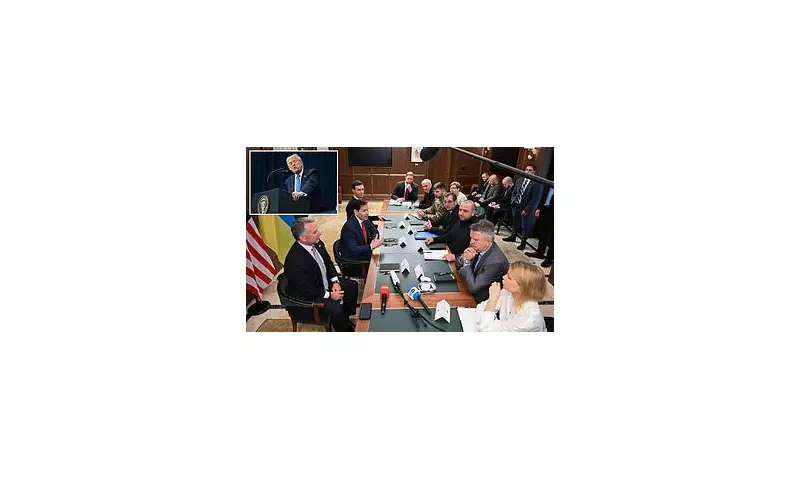
The US Department of State issued a statement on Friday outlining the progress made during a series of high-level meetings. Special Envoy for Peace Steven Witkoff and Donald Trump's son-in-law, Jared Kushner, have been leading the American efforts. They have held six meetings with Ukrainian counterparts in the past two weeks alone, with another session scheduled for Saturday.
Their discussions have involved Ukraine's National Security and Defense Council head, Rustem Umerov, and the Chief of the General Staff, General Andriy Hnatov. A key recent meeting took place in Miami, where talks centred on the outcomes of a separate dialogue Kushner and Witkoff held with Russian leadership.
The $300 Billion Proposal and Russian Demands
According to reports, during the meeting with Russian officials, Kirill Dmitriev – described as President Vladimir Putin's handpicked negotiator – advocated for a controversial plan. He proposed that the $300 billion of Russian central bank assets currently frozen in Europe should be unfrozen to fund joint US-Russian investment ventures and a 'US-led reconstruction' of Ukraine.
The State Department confirmed that American and Ukrainian officials have agreed on a framework for security arrangements and discussed the deterrence capabilities needed to maintain a lasting peace. However, they stressed that any real progress is contingent on Russia demonstrating a serious commitment to long-term peace, including de-escalation and an end to hostilities.
The talks also covered a 'prosperity agenda' for rebuilding Ukraine, alongside joint US-Ukraine economic initiatives, though specific details remain undisclosed. US officials emphasised that 'credible steps' toward a ceasefire and measures to prevent renewed aggression are paramount.
Trump's Controversial 28-Point Peace Plan
These negotiations follow the leak last week of Donald Trump's 28-point peace plan, which was widely criticised across Europe for appearing overly favourable to Moscow. The proposed agreement would reportedly allow Russia to retain control of occupied territories including Crimea, Donetsk, and Luhansk, and potentially claim additional Ukrainian land.
It would freeze the current front lines, effectively cementing Russian gains in Kherson and Zaporizhia oblasts, and maintain its connection to Crimea. Crucially, the plan would permanently bar Ukraine from joining NATO – a long-standing Russian demand – and see sanctions on Russia lifted for its 'reintegration into the global economy.' In exchange, Ukraine would receive weaker security guarantees from the US and NATO.
Ukrainian President Volodymyr Zelensky has acknowledged the intense pressure on his nation, stating Ukraine faces a 'very difficult choice' between losing its dignity or risking the loss of a key partner. He has vowed to continue working with the US throughout the peace process.
The broader Russian strategy, as reported, is to present itself to the Trump administration as a 'land of opportunity' rather than a threat, aiming to reshape Europe's economic landscape and create divisions between the US and its allies. With the conflict now in its third year, and both sides deeply entrenched, the path to peace remains fraught with complexity and opposing demands.