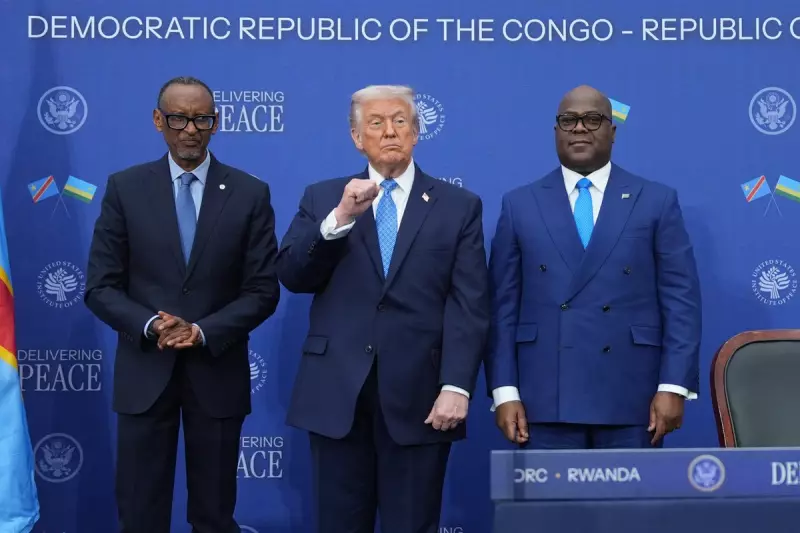
US President Donald Trump is poised to host a critical summit on Thursday, bringing together the leaders of the Democratic Republic of Congo (DRC) and Rwanda in a bid to sign a deal to end the protracted and devastating conflict in Central Africa. This high-stakes diplomatic move follows failed peace efforts mediated earlier this year by Qatar and the United States.
The Stakes: A Conflict Rooted in Genocide and Minerals
The origins of the current violence are deeply entangled with the horrific aftermath of the 1994 genocide in Rwanda. During that period, Hutu militias killed an estimated 500,000 to 1 million ethnic Tutsis, as well as moderate Hutus and Twa people. When Tutsi-led forces retaliated, nearly 2 million Hutus fled into eastern Congo, fearing reprisals. The tensions between these groups have simmered and repeatedly erupted in Congo ever since.
Rwanda has long accused elements within the Congolese army of protecting Hutu militias it claims participated in the genocide and pose a threat to its Tutsi population. The primary rebel group in the current conflict, the M23, is composed mainly of ethnic Tutsis who previously failed to integrate into the Congolese army. After a decade of dormancy following a failed 2012 insurgency, the group resurged powerfully in 2022.
This year saw a major escalation, with the M23 capturing Goma and Bukavu, two pivotal cities in eastern Congo. Despite a ceasefire agreed earlier in the year, recent weeks have seen residents report ongoing clashes and rebel advances, with both sides accusing the other of violations.
A War Fueled by Critical Resources
Beyond the ethnic and historical grievances lies a powerful economic driver: control over the mineral-rich region of eastern Congo. The DRC is the world's largest producer of cobalt, a metal essential for electric vehicle batteries and smartphones, and a leading supplier of coltan, used in everything from fighter jets to laptops.
The United Nations has accused Rwanda of benefiting from minerals "fraudulently" exported from M23-controlled areas, a claim Rwanda denies. However, the UN also estimates the M23's forces have grown from hundreds in 2021 to around 6,500 fighters today, and that there could be up to 4,000 Rwandan troops operating in Congo—a presence Rwanda justifies as necessary for its security.
The scramble for these resources has global dimensions. Both China and the United States have significant financial interests in Congolese mines. For the Trump administration, securing access to these critical minerals and rare earth elements is a strategic priority to circumvent Chinese dominance of the supply chain.
The Human Cost and the Path to Peace
The tragic human consequence of this decades-long struggle is immense. Little of the region's vast mineral wealth has reached ordinary Congolese citizens, with approximately 60% of the nation's 100 million people living below the poverty line. The fighting has destabilised the country, with over 100 armed groups operating in the region.
As President Trump convenes the leaders of the DRC and Rwanda, the world watches to see if this direct intervention can achieve what other mediators could not. The deal on the table aims not only to halt the immediate violence but also to address the complex web of security concerns, ethnic divisions, and economic interests that have fuelled one of Africa's most intractable conflicts. The success or failure of this summit will have profound implications for regional stability and the global race for critical resources.