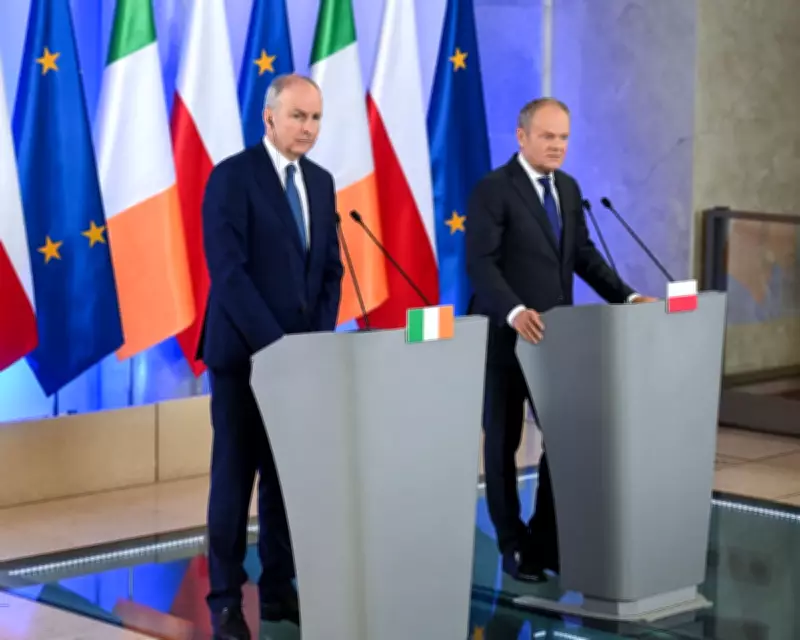
Polish Prime Minister Donald Tusk and Irish Prime Minister Micheál Martin have issued a scathing joint condemnation of Hungary's foreign minister, labelling his alleged communications with Russia as "repulsive" and "sinister". The leaders made these remarks during a bilateral meeting held in Warsaw, Poland, on 31 March 2026, in response to a leaked audio investigation that has sent shockwaves through the European Union.
Leaked Audio Sparks EU Outrage
A joint media investigation, published just days before a critical Hungarian election, has released leaked phone calls between Hungarian Foreign Minister Péter Szijjártó and his Russian counterpart, Sergei Lavrov. The report, produced by The Insider alongside regional outlets including VSquare, Delfi, FrontStory, and the Investigative Center of Ján Kuciak, alleges that Szijjártó told Lavrov, "I am always at your disposal," and offered assistance in amending EU sanctions to benefit Russia.
Strong Condemnation from EU Leaders
Prime Minister Donald Tusk described the audio as "disheartening" and a confirmation of the "deeply disturbing" relationship between Budapest and Moscow. He stated, "What these recordings have revealed is more than just the political dependency of the Budapest government on Moscow; it has exposed just how unacceptable and bizarre this relationship truly is." Tusk emphasised that an EU foreign minister facing accusations of reporting to Russia is "repulsive".

Irish Prime Minister Micheál Martin echoed these sentiments, calling the development "very sinister" and noting the "deferential tone" in the conversations as alarming. He added, "It's unacceptable." The EU's top diplomat, Kaja Kallas, reinforced that European ministers should work for Europe, not Russia.
Hungary's Response and Election Context
Szijjártó did not deny the calls but claimed his conversations were intercepted by foreign secret services, calling it a "huge scandal" timed to influence the Hungarian parliamentary election. This controversy unfolds as Prime Minister Viktor Orbán and his Fidesz party face their toughest electoral battle in 16 years, with polls suggesting they are trailing behind opposition leader Péter Magyar and the Tisza party.
The election outcome is being closely monitored globally, as it could reshape the EU's dynamics and impact far-right movements. Orbán has maintained close ties with Vladimir Putin post-invasion of Ukraine, repeatedly blocking EU unity efforts, leading critics to dub him "Putin's Trojan horse in the EU".
Broader Implications for EU Unity
Last week, allegations surfaced that Szijjártó routinely passed confidential EU meeting details to Lavrov. While initially dismissed, he later acknowledged discussing EU agendas and decisions with Lavrov, defending it as "diplomacy". This incident adds to concerns about Hungary's role within the bloc, undermining collective security and sanctions policies aimed at countering Russian aggression.
The leaked audio has intensified scrutiny on Hungary's democratic backsliding, including weakened institutions and eroded media freedom, casting a shadow over the upcoming election and the future of EU cohesion.