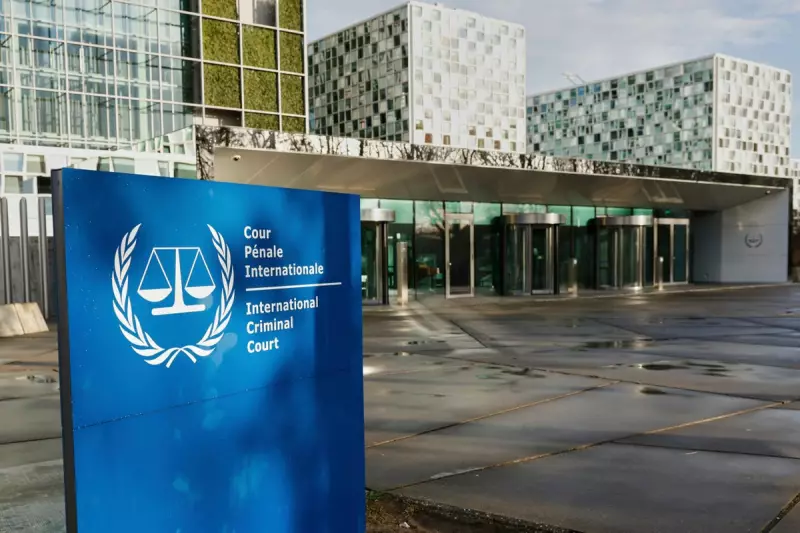
A sombre atmosphere has descended upon The Hague this week as the International Criminal Court (ICC) convenes its annual meeting amidst a perfect storm of external pressure and internal turmoil. Hundreds of diplomats, lawyers, and activists have gathered to confront what many see as unprecedented challenges threatening the court's very future.
A Defiant Stance Amidst Mounting Pressure
In her opening address on Monday, the court's president, Judge Tomoko Akane, struck a defiant tone before delegations from 125 member states. "We never accept any kind of pressure," Akane declared. However, the reality facing the institution is stark. The ICC, established in 2002 as the world's permanent court for prosecuting genocide, war crimes, crimes against humanity, and aggression, is navigating a critical juncture without a chief prosecutor and with key staff under sanction.
The 24th Assembly of States Parties is scheduled to run through Saturday at a theatre and conference centre. Key agenda items include approving the court's annual budget and debating institutional functions. Officials are seeking commitments for 195 million euros (approximately $227 million) to fund next year's operations.
The Tangible Impact of US Sanctions
A primary shadow over the proceedings is the impact of sanctions imposed by the administration of US President Donald Trump. Nine staff members, including six judges and the chief prosecutor, have been sanctioned for pursuing investigations involving US and Israeli officials. The United States, alongside Israel, Russia, and China, is not a member of the court.
These sanctions have significantly hampered the ICC's work across multiple investigations. Adam Keith, Director of Human Rights First, told the Associated Press they have "cast an odd shadow over the event." The chilling effect is evident: two US-based human rights groups withdrew from events over sanctions violation fears, and the Paris-based International Federation for Human Rights kept its American staff out of meetings attended by sanctioned officials.
Leadership Crisis and Ebbing Support
Compounding the external pressure is an internal leadership crisis. While not formally on the agenda, the hallways are abuzz with discussion of the ongoing investigation into Chief Prosecutor Karim Khan. He has temporarily stepped down amid allegations of sexual misconduct, which are being probed by a United Nations watchdog. A year after the allegations were submitted, the report remains unfinished, though senior diplomatic sources indicate it is scheduled for finalisation by year's end.
Simultaneously, support from member states is fracturing. Since last year's meeting, four countries have announced intentions to withdraw. Hungary, after refusing to arrest Israeli Prime Minister Benjamin Netanyahu on an ICC warrant, declared its plan to leave. Mali, Burkina Faso, and Niger followed suit in September. In a telling move in January, Italy—where the court's founding Rome Statute was signed in 2001—returned a wanted Libyan warlord to his home country instead of transferring him to The Hague.
With no police force of its own, the ICC's efficacy hinges entirely on such cooperation from member states for arrests and transfers.
A Glimmer of Judicial Activity
Despite the political headwinds, the court's courtrooms are witnessing a notable uptick in activity. The year began with the trial of Central African Republic militia commander Mahamat Said Abdel Kani as the sole major proceeding. By year's end, the court has taken custody of two high-profile suspects.
In March, former Philippines President Rodrigo Duterte was sent to The Hague on a warrant accusing him of crimes against humanity related to his deadly anti-drug crackdowns. On Monday, Germany handed over Khaled Mohamed Ali El Hishri, a senior commander from a Tripoli prison, who faces charges of war crimes and crimes against humanity.
As delegates debate budgets and procedures, the fundamental question hanging over the conference centre in The Hague is not merely about funding or functions, but about survival. The International Criminal Court, conceived as a cornerstone of global accountability, finds itself fighting for its own future while striving to deliver justice for the world's most heinous crimes.