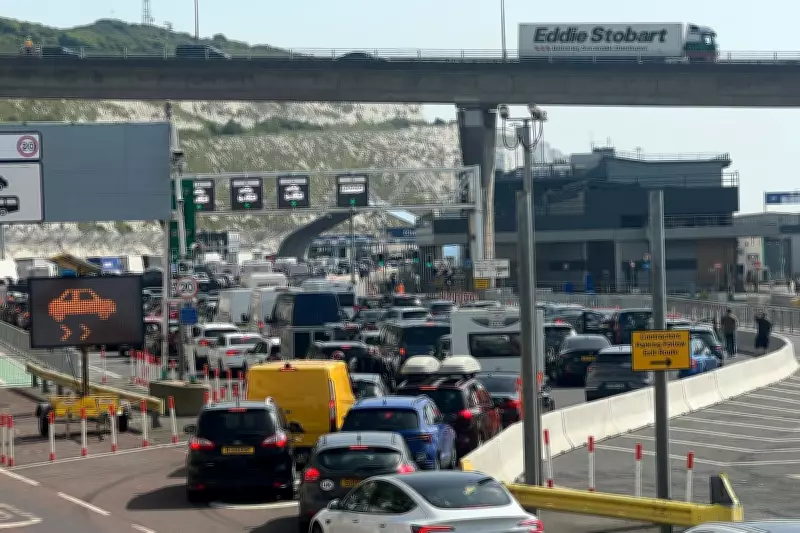
The recent chaos at the Port of Dover underscores a fundamental truth: the European Union's Entry-Exit System (EES) was never designed to handle the volume of British travellers, and a bespoke solution is urgently needed.
The Article 9 Intervention
On Saturday morning, queues at Dover's Eastern Docks stretched for hours as half-term holidaymakers faced delays of up to two and a half hours after entering the port. The congestion was predictable, given that juxtaposed border controls process passengers on British soil before departure. However, the system was originally intended for quick checks on EU citizens. Brexit changed that, making Britons subject to EES—a digital border scheme that was still in development when the referendum took place.
At around 9:30 am, French border officials invoked Article 9 of European Regulation 2016/399, citing exceptional and unforeseen circumstances. They reverted to manual passport stamping, instantly clearing the backlog. The move was a stark admission that EES, in its current form, is ill-suited for the sheer volume of British travellers.

Other Border Bottlenecks
Similar issues have emerged elsewhere. At Venice Marco Polo airport, passengers from Stansted faced a 150-minute wait for fingerprinting and facial biometrics—a process quietly skipped at Dover. Simon Atkins, a traveller, described the experience as appalling, particularly for families with young children.
The Need for a Tailored Solution
The EES concept remains valid for security, but Brussels must acknowledge that Britons constitute over half of all third-country nationals entering the Schengen area. The current system places excessive pressure on inadequate border points. A collaborative UK-EU approach is needed to design a system that works for both sides, rather than forcing a one-size-fits-all solution that leads to gridlock.
As Simon Calder notes in his final column, the Dover debacle proves that the EES was never designed for the British. It is time to think again.