The Australian government is refusing to issue travel documents to allow the repatriation of its citizens from detention camps in north-east Syria, despite a direct offer of assistance from the United States and warnings that leaving them there fuels the risk of Islamic State regenerating.
A Life Under Threat in 'Militarised' Camps
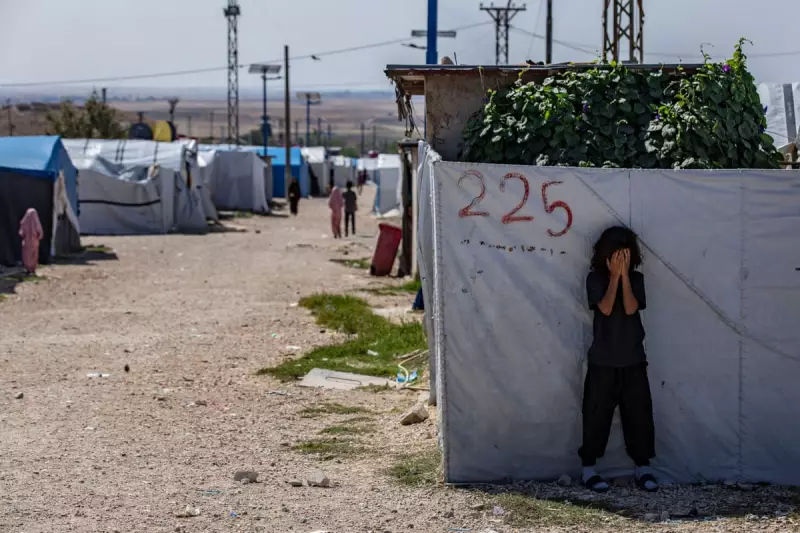
Fewer than 40 Australians, the vast majority of them young children, remain detained in the Roj and al-Hawl camps. They are the wives, widows, and children of deceased or imprisoned Islamic State fighters. Held without charge since 2019, their conditions are deteriorating rapidly.
Advocates and official notes from meetings with the government reveal the camps are "becoming more militarised, intrusive and securitised." Children have been weaponised against their mothers, with warnings that any attempt to breach the camp's perimeter fence will be met with lethal force. A Syrian source described the policy as "shoot first and ask questions later."
Life inside the camps is brutal. Dysentery outbreaks are common, latrines back up in freezing winters where temperatures plummet below zero, and heating fuel is scarce. One Australian child previously developed frostbite. Fires regularly break out in the dilapidated tents, and diseases spread quickly among undernourished children living in close quarters.
US Offer Rejected Amid Political Concerns
The United States, which funds much of the security in the region, has repeatedly urged all nations to repatriate their citizens. It has offered to facilitate the safe extraction of the Australians on the condition they are issued passports or travel documents.
However, in a meeting in June 2024 recorded in contemporaneous notes, Home Affairs Minister Tony Burke told advocates from Save the Children that "this is not something the government is considering at this time." He stated the government had no plan for repatriation.
Internal government concerns over political backlash appear to be a significant factor. Notes from a separate meeting attributed to "TB" – understood to be Burke – stated "politics harder at this end of term" and "Can't see way to navigate earlier." There were reported fears of a negative reaction in key marginal seats in western Sydney, despite many detainees being from Victoria.
The Growing Security Risk
American officials have framed the issue as an urgent international security concern. Admiral Brad Cooper, commander of US Central Command, told a UN conference in September 2024 that "these camps are incubators for radicalisation."
"This problem will only get worse with time … inaction is not an option," Cooper warned. "Every day without repatriation compounds the risk to all of us."
His warning is underscored by a report from the inspector general for US operations in Syria and Iraq, which found IS continues to indoctrinate camp residents and infiltrate detention facilities. One such incursion led to the deaths of a woman and a child.
Australia has successfully repatriated citizens on two prior occasions: eight orphaned children in 2019, and four women and 13 children in 2022. In a separate incident in October 2023, two women and four children escaped al-Hawl camp and later returned to Australia after obtaining passports in Lebanon.
For the remaining group, however, the government's position remains firm. Minister Burke confirmed to The Guardian that the request for a repatriation operation was refused, stating "There was no repatriation and no assistance." With a US drawdown in humanitarian funding for the region, the stateless Australians face an increasingly uncertain and dangerous future.