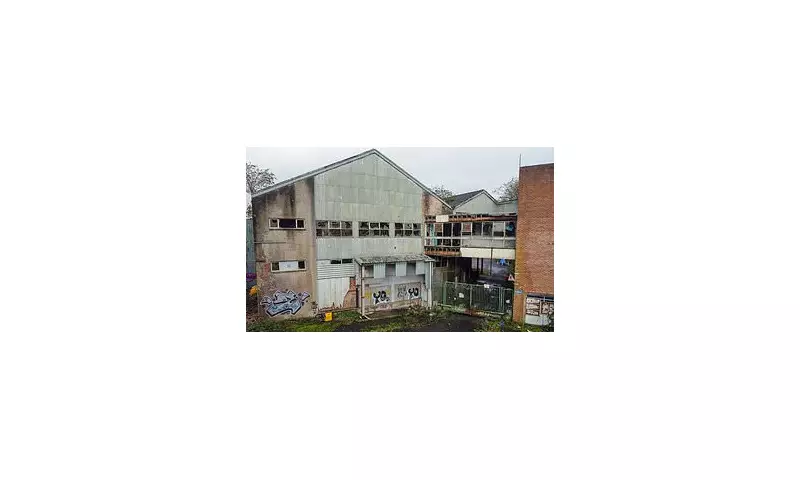
For more than a quarter of a century, families living near a derelict asbestos factory in Rochdale have endured what they describe as a living nightmare, plagued by urban explorers and illegal fly-tipping despite the ever-present risk of deadly exposure to the carcinogenic material.
Dubbed 'Rochdale's Chernobyl' for its apocalyptic appearance and known health dangers, the former Turner Brothers factory site remains a decaying monument to industrial decline and a persistent public health concern.
A Legacy of Death and Decay
The Turner Brothers factory, once the world's largest asbestos manufacturer, operated for decades before its closure in the 1990s. The 75-acre site now stands as a dilapidated wreck, its buildings stripped bare by thieves who have removed all valuable machinery and metalwork.
Local resident Nathan Jones, 43, voiced a common concern among those who remember the factory's operational days. "I don't know one single person who worked at Turner Brothers and hasn't died of cancer," he revealed. "My step-mum worked there for 15 years and died from it."
Mr Jones also expressed fears about environmental contamination, stating he's been told asbestos was buried underground and has potentially seeped into the ground and nearby river. "People aren't allowed to fish in the lodge because of the health issues," he added.
Urban Explorers Defy Danger
Despite prominent warning signs about the health risks, the vast abandoned structures continue to attract urban explorers who film their adventures for social media platforms like YouTube.
Reece Jackson, 28, who has lived close to the site for 26 years, admitted he regularly visits the dangerous site for escapism. "I've been in and out of there for years. Ever since it closed down," Mr Jackson said. "I know it's full of asbestos and is known as Rochdale's Chernobyl but that doesn't bother me."
He added: "I am not bothered about the health risks with asbestos and it's probably too late now with the amount of time I've spent in there. I am going to have to die of something."
Mr Jackson described frequently climbing onto the roof to "clear my head and get away from everything," while acknowledging the very real physical dangers of the crumbling structure.
Fly-Tipping and Failed Security
Long-term resident Frances Rand, 78, identified fly-tipping and fires as recurring problems that the community must often deal with themselves. "I am sick of coming down here and seeing all this fly-tipping," he stated.
Mr Rand explained that while the site previously had 24-hour security, this has been replaced by CCTV cameras that he predicts will likely be vandalised. "Kids and urban explorers are always getting in. That has made everything worse," he noted.
The scale of the fly-tipping problem is substantial, with Nathan Jones reporting that rubbish blocking access lanes needs moving regularly. "Every week something is dumped here. Some of the rubbish dumped has people's addresses on it," he said, adding that complaints to the council have yielded little action.
Campaigner Mick Coates has advocated for transforming the hazardous area into a country park. He expressed particular concern about the long-term dangers, noting: "The history it has, the danger it poses in the long term could only hit 40 years from now with it being asbestos."
He highlighted the particular risk that comes with the material being "buried all over so there is no knowledge about what areas are safe or not locally."
The current owners, Spodden Park Ltd, have met with Rochdale Council to discuss public safety and preventing trespassers from accessing the derelict factory off Rooley Moor Road.
A company spokesperson described an "ongoing battle" with determined trespassers who regularly damage fencing and destroy CCTV cameras. "We want to remind everyone that asbestos is only dangerous if it is disturbed," the spokesperson emphasised. "By entering the site, these trespassers risk disturbing the material and put themselves at risk."
Despite these security efforts and the known dangers, the abandoned factory complex continues to draw those seeking adventure and those seeking to illegally dump waste, leaving local residents to wonder when, after 25 years of campaigning, their 'Chernobyl' will finally be addressed.