
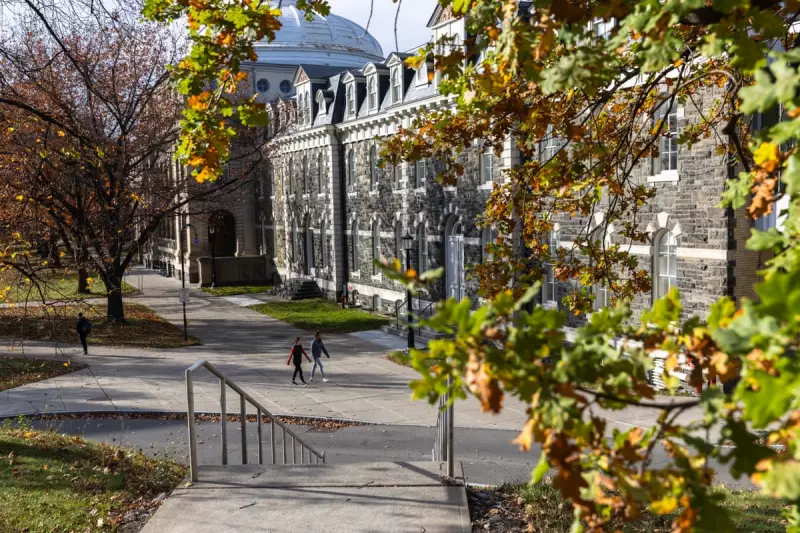
Cornell University has reached a significant settlement with the Trump administration, concluding a federal investigation and paving the way for the restoration of more than $250 million in crucial research funding.
The Terms of the Agreement
Announced on Friday, the agreement sees the prestigious Ivy League institution, located in Ithaca, New York, become the fifth university to bow to government demands. In exchange for the reinstatement of federal funds, Cornell has agreed to several key concessions.
The university will share admissions data with the government, pay a $30 million sum, and invest a further $30 million into research programmes that benefit farmers. This agricultural focus acknowledges Cornell's long-established history in that field of study.
Furthermore, Cornell committed to continually evaluating the campus climate, with particular attention to Jewish students. Crucially, the settlement also involves the university affirming the Trump administration's interpretation of civil rights laws, which labels diversity initiatives as unlawful race-based discrimination.
A Pattern of Government Pressure
This settlement follows similar agreements reached with other leading universities, including Columbia, Brown, the University of Pennsylvania, and the University of Virginia. These deals have sparked considerable controversy, with critics accusing the government of overreach and lambasting the institutions for what they see as a capitulation to political pressure.
The Trump administration has leveraged allegations of antisemitism on campus, often following large-scale student protests against Israel's war in Gaza, to place dozens of universities under investigation. This strategy has used landmark anti-discrimination legislation as a tool to push for sweeping reforms that extend far beyond addressing antisemitism.
Cornell's new president, Michael I Kotlikoff, defended the decision. He stated that the deal ultimately allows the university to preserve its independence from intrusive government monitoring.
Wider Academic Backlash
The administration's actions have not gone unchallenged. Hundreds of students and faculty members across the United States staged protests on Friday, urging university leaders to reject what the White House has termed a compact.
This compact would grant universities preferential access to federal funding in return for aligning their policies with the administration's anti-diversity agenda. Many see this as an unprecedented assault on the autonomy of higher education institutions.
President Kotlikoff, however, emphasised the protective elements of the Cornell agreement. "The agreement explicitly recognizes Cornell’s right to independently establish our policies and procedures, choose whom to hire and admit, and determine what we teach, without intrusive government monitoring or approvals," he wrote in a public statement.