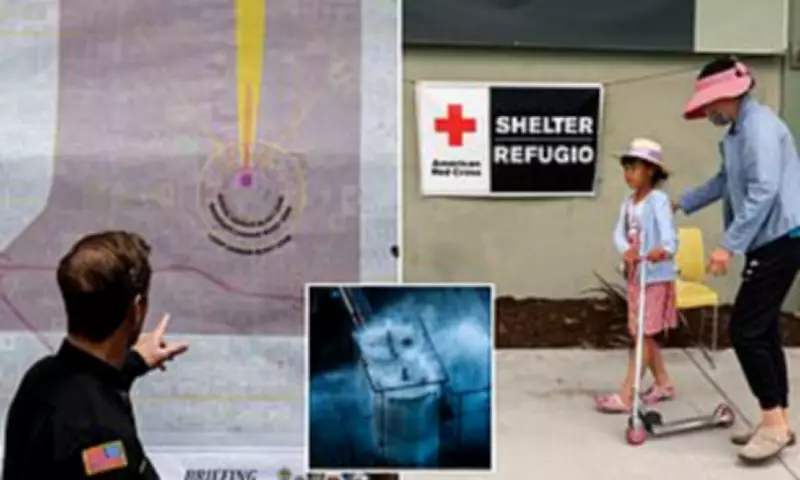
Authorities have released a map detailing the potential blast radius of a chemical tank that is on the verge of exploding at an aerospace facility in Garden Grove, California. More than 40,000 residents have been evacuated following a toxic leak that began on Thursday afternoon.
Chemical Tank Crisis
The 34,000-gallon tank at the GKN Aerospace facility contains methyl methacrylate (MMA), a highly flammable chemical used in the production of acrylic plastics. Despite efforts to contain the leak, officials have been unsuccessful and now warn that the tank could 'rupture or explode' at any moment.
Orange County Fire Authority Division Chief Craig Covey stated, 'This is not precautionary. This thing is going to fail, and we don't know when.'

Blast Zone Map
On Saturday, officials released a map showing the potential blast zones should the tank explode. The innermost circle, representing the severe damage blast zone, indicates areas where 'severe structural damage and significant harm' are expected. Surrounding this are the moderate and light blast damage zones, where officials predict more limited structural damage and potential harm.
At the center of the map, a dark red oval marks areas where flammable conditions could spark a fire or flash fire. The orange oval indicates zones immediately dangerous to life and health, where exposure could cause injury through inhalation or direct impact. The largest yellow oval zone is considered non-hazardous and marks the odor threshold.
Health Risks
Orange County Fire Authority Division Chief Nick Freeman warned that MMA poses severe health risks, particularly to the respiratory system. 'Respiratory is our primary concern, so it's a respiratory irritant. It can start off very mild but it can progress to a point where you would probably require hospitalization, if not more,' he told KTLA.
Orange County Health Officer Dr. Regina Chinsio-Kwong added that inhaling the vapor could cause dizziness, nausea, and severe respiratory distress at high levels. She noted that the chemical has a strong, fruity scent but emphasized that smelling it does not necessarily indicate danger.
Evacuation and Investigation
Between 40,000 and 50,000 people have fled their homes in what officials describe as an 'unprecedented industrial disaster.' Late Saturday, Orange County prosecutors announced an investigation into GKN Aerospace, with District Attorney Todd Spitzer calling the situation 'horrific.' The investigation will examine the company's operations, maintenance practices, and whether prior warning signs were ignored.
Officials have erected sand barriers and containment systems to prevent chemicals from reaching storm drains and waterways. Drones monitor the tank's temperature as hazmat crews search for solutions. Covey said emergency officials have contacted specialists across the state and country for 'out of the box' ideas to prevent disaster.
Residents have described the difficulty of deciding what belongings to take, uncertain when they can return. The crisis has also forced widespread school closures and cancellation of outdoor activities.