Philippine Transport Workers Demand Government Accountability Amid Global Oil Price Surge
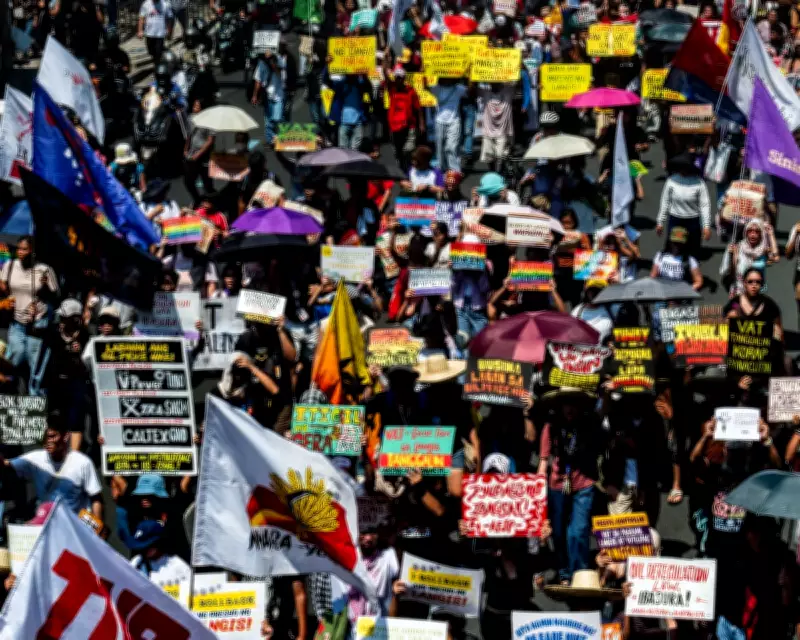
Transport groups across the Philippines are intensifying calls for government accountability as the nation grapples with the highest increase in petrol prices globally since the US-Israel war on Iran. This crisis has left Manila's transport workers struggling to make ends meet, with widespread protests erupting over soaring fuel costs and supply issues.
Drivers Face Dire Economic Strains
Jayson Naga, a tricycle taxi driver in Manila, exemplifies the hardship. Normally earning P500 (US$8) daily to support his four children, he now sees nearly a third of his income wiped out by a 60% surge in fuel prices. "If gas prices go up any further, there will be nothing left for us," Naga told reporters, noting that family luxuries like weekend mall trips have been cut. Similarly, Hogan Ruben, another tricycle driver, has extended his workday by five hours, often until midnight, to compensate. "We have no choice but to keep grinding," Ruben said, highlighting the relentless pressure on livelihoods.
Government Response and Public Outcry
The Philippines, which imports almost all its crude oil from the Middle East, declared a national energy emergency in response to the crisis. President Ferdinand Marcos announced on 27 March that the government secured enough crude oil for domestic processing until 30 June, while exploring alternative sources like Russia. However, transport groups remain dissatisfied, staging two-day nationwide strikes to demand oil price rollbacks through scrapping fuel excise taxes and the oil deregulation law. Mody Floranda, president of the transport group Piston, criticized Marcos as "inutile," arguing that hardship extends beyond transport to the entire public. "How can workers survive on low wages while fuel prices keep climbing?" he questioned.

Human Rights and Economic Implications
Edgardo Cabalitan, an NGO worker, joined protests at a major gas station, framing the crisis as a human rights issue. "The oil crisis is not just an issue of rising costs. It directly strikes at human rights. As oil prices rise, the cost of goods follows, affecting livelihoods and access to basic needs," he said. Jan Carlo Punongbayan, an assistant professor at the University of the Philippines School of Economics, warned of worsening conditions, with global crude oil prices potentially reaching $200 per barrel. He predicted double-digit inflation rates by May, unseen in years, even during the pandemic, due to indirect inflationary effects.
Broader Social and Economic Fallout
Food prices are expected to rise rapidly post-harvest season, compounded by higher transport costs. Social media buzzes with discussions on solar panels and electric vehicles, while grocery stores see panic-buying reminiscent of the pandemic. Incidents of theft, such as an SUV driver fleeing a gas station without paying, underscore the desperation. In response, community-led initiatives like the Maginhawa street pantry have resurfaced, offering food packs to drivers. Naga expressed hope, saying, "When we saw that the community pantry was back, it gave us drivers a sense of hope again." Over a dozen similar pantries have emerged nationwide, providing a lifeline in this escalating crisis.