Chiang Mai's New Year Festivities Marred by Severe Smog and Economic Strain
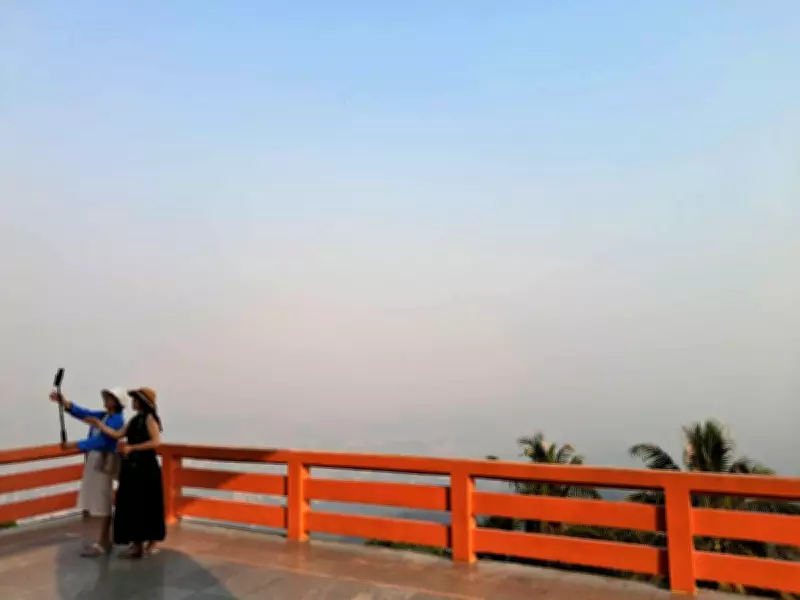
Doi Suthep temple, one of northern Thailand's most iconic landmarks, is renowned for its breathtaking vistas over Chiang Mai and the verdant, forested mountains that encircle the city. In recent weeks, however, visitors have been met with a starkly different scene: a dense, grey haze that obscures the landscape entirely. This persistent smog, driven by rampant wildfires, has plunged the region into an air pollution crisis, dealing a heavy blow to local tourism already reeling from geopolitical tensions.
Wildfires Trigger Emergency Declarations and Health Alarms
Intense air pollution from ongoing wildfires has forced three provinces in northern Thailand to declare states of emergency. The haze has led to a sharp increase in pollution-related illnesses, overwhelming healthcare facilities and alarming residents. According to Thailand's Geo-Informatics and Space Technology Development Agency, which monitors fire hotspots, there were 4,579 wildfire sites reported across the country on a recent Monday. Chiang Mai consistently ranks among the world's top five most-polluted cities, as tracked by IQAir, highlighting the severity of the situation.
This annual pollution problem is exacerbated by farmers who illegally set fires to clear land after harvests, a practice that persists due to financial constraints and lack of access to expensive machinery. "It's linked to the financial strain that they're under," explains Weenarin Lulitanonda, co-founder of the Thailand Clean Air Network. "What is cheaper than a matchstick to manage these things?"

Tourism Industry Suffers Dual Blows from Smog and War
The haze has emerged just as Chiang Mai prepares for Songkran, Thailand's New Year holiday, a peak tourism period that began recently. Streets are adorned with shops selling water pistols and buckets for the festival's famous water fights, but business groups report a significant slowdown in bookings. Tour operators like Pitsamai Tuprit, who runs Kai Rider travel, have seen half of their customers cancel in recent weeks due to pollution concerns. "Chiang Mai's selling point is the chance to stay in the mountains, breathing fresh air. But when the dust comes, it destroys everything," she laments.
Compounding these issues, the US-Israel war on Iran has disrupted flights and driven up operating costs, prompting Thailand's tourism authority to revise down national targets for international arrivals by up to 18%. Pitsamai has cancelled most tours during Songkran, citing traffic congestion and soaring gas prices as additional deterrents. "It isn't worth it," she states bluntly.
Health Impacts Deepen with Long-Term Risks
The pollution crisis is taking a severe toll on public health, with doctors reporting a more than doubling in patient caseloads. Atikun Limsukon, a specialist in chest and lung care, notes that even healthy individuals suffer acute effects, such as blurry vision, corneal ulcers, nosebleeds, and chronic rhinitis. Vulnerable patients with pre-existing conditions face heightened risks, including readmissions for coughing up blood and requiring oxygen support.
High-profile cases, like the death of 29-year-old doctor and clean-air campaigner Krittai Tanasombatkul in 2023, have shaken the community. Tanasombatkul, a non-smoker with a healthy lifestyle, was diagnosed with lung cancer, underscoring the indiscriminate nature of pollution-related illnesses. Pathanika Poonchai, a school food vendor, expresses widespread fear: "I don't drink, I don't smoke. So I feel, why should I be at risk of getting lung cancer? We should all have clean air." Her five-year-old daughter Aerin has experienced daily nosebleeds since late March, a common symptom among children exposed to poor air quality.

Community Responses and Legislative Challenges
Families in Chiang Mai are adopting drastic measures to cope with the haze. Some keep children indoors with air purifiers, while others send them to other provinces or invest in costly positive pressure systems for their homes. Pathanika recalls happier times camping outdoors with her family, a pastime now impossible during haze season. Instead, they save money to escape to the seaside annually. "I feel sad, I feel bad that they have to breathe in this polluted air. I know that in the long run, it will definitely have some kind of effect on their health," she says.
In response, the Thailand Clean Air Network is advocating for a Thai Clean Air bill, which would impose fines on major polluters and establish a Clean Air Fund to support businesses in transitioning to cleaner technologies. However, the bill faces legislative hurdles and opposition from groups labeling it anti-business. Weenarin argues that inaction is economically damaging: "Even if you don't care about the environment, this is the goose that will lay your golden egg." She emphasizes that tourists are drawn to Thailand for its natural beauty, which is now under threat.
Authorities have attempted to mitigate the haze through artificial rain, but pollution levels remain high. As the crisis persists, it underscores the urgent need for comprehensive solutions to protect both public health and the vital tourism economy in northern Thailand.