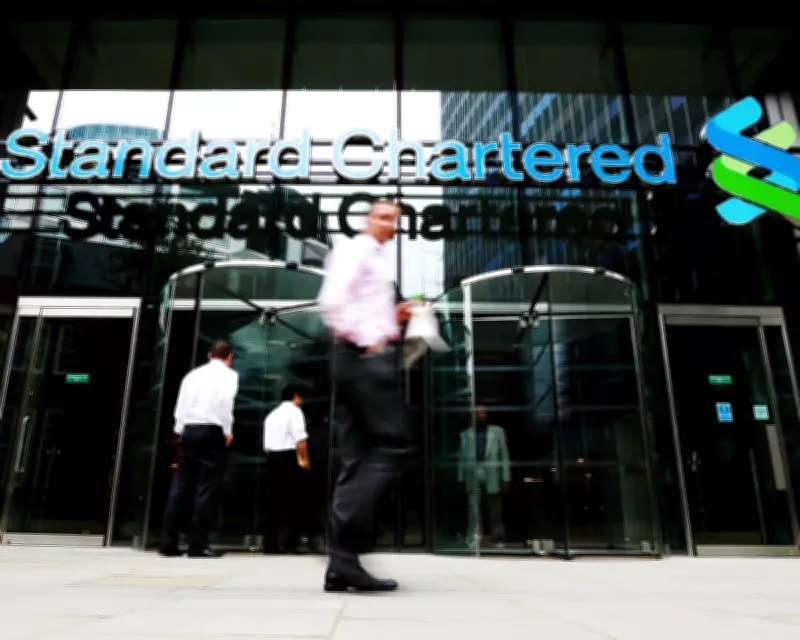
Standard Chartered has announced plans to cut more than 7,000 jobs over the next four years as it increasingly adopts artificial intelligence (AI) and automation to streamline its operations.
Job Reduction Details
The London-headquartered lender stated on Tuesday that it would reduce 15% of its corporate function roles by 2030, resulting in approximately 7,800 redundancies among its over 52,000 employees in such positions. The bank's total global workforce stands at nearly 82,000.
Chief Executive Bill Winters indicated that the reduction will be driven by automation and AI adoption, with some staff being reskilled for new roles. The most affected positions will be in back-office centres located in Chennai, Bengaluru, Kuala Lumpur, and Warsaw.

Not Cost-Cutting, But Investment
Winters emphasised that this move is not purely about cutting costs. “It’s not cost-cutting. It’s replacing in some cases lower-value human capital with the financial capital and the investment capital we’re putting in,” he said. The bank aims to automate more of its core banking system, with AI playing a significant role as a facilitator and enabler.
The job cuts come alongside higher shareholder return targets announced in a strategy update. Standard Chartered is at the tail-end of a decade-long effort to transform from a potential takeover target into a steadily profitable lender.
Industry Context
Standard Chartered’s move to streamline operations and rein in costs reflects a broader trend among global firms that are slashing jobs by deploying AI to improve efficiency. Global lenders are also racing to integrate new AI models and address rising cyber threats.
The announcement also seeks to quell market speculation about succession planning after Winters’s 11-year tenure. The bank confirmed that Winters will remain for the next few years to oversee the latest strategy.
Geopolitical and Market Risks
Standard Chartered is aiming for stronger growth despite geopolitical uncertainty in some key markets. Analysts have noted that Asia-Pacific banks may need to increase loan-loss provisions if the Iran conflict persists, as higher energy costs and weaker growth strain borrowers.
The bank set aside $190 million (approximately £142 million) in precautionary provisions linked to the Middle East conflict in the first three months of the year. When asked about the impact of geopolitical and market risks on reaching its targets, Winters stated, “We are extremely resilient.”
Standard Chartered’s focus remains on the Asia-Pacific and Africa regions, where it continues to navigate challenges while pursuing operational efficiency through technology.