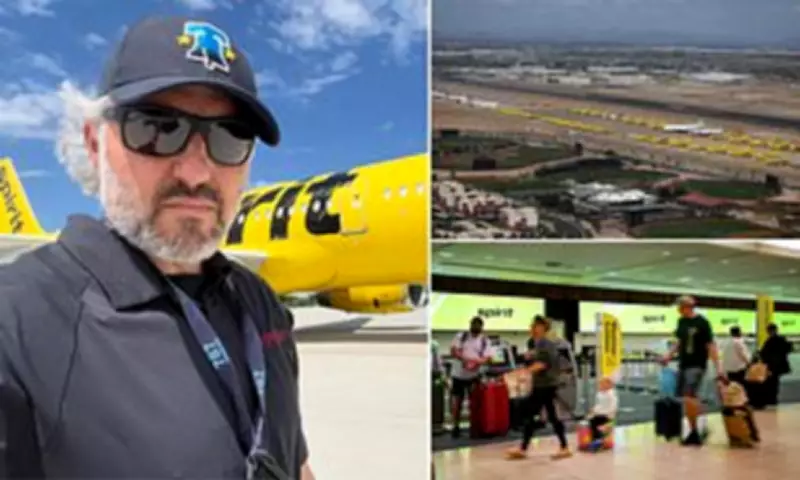
The final journey for dozens of Spirit Airlines jets began before sunrise — not with passengers on board, but with former Spirit pilots quietly flying the airline's bright yellow planes into the Arizona desert after the carrier's dramatic collapse.
Early in the morning of May 2, just hours after Spirit shut down, crews from Delaware-based Nomadic Aviation Group began repossessing aircraft scattered across airports nationwide. In little more than a week, the company had ferried 23 Airbus jets to long-term storage facilities outside Phoenix and Tucson.
The haunting scenes of empty Spirit aircraft lined up on desert tarmac have become enduring symbols of the airline's sudden downfall.

'It was surreal,' Nomadic managing partner Steve Giordano told CNBC. 'This is the last time this will ever happen, and I happen to be flying it.'
Giordano said his company received the go-ahead to begin recovering the planes in the evening of May 1, just hours before Spirit officially ceased operations. Many of the pilots helping move the aircraft were former Spirit captains who had abruptly lost their jobs when the airline collapsed.
The shutdown left roughly 14,000 employees out of work and triggered one of the largest airline liquidations in modern US aviation history. Spirit's demise marked the end of a carrier that once reshaped budget air travel in America with ultra-cheap fares and bare-bones service.
Now, many of its aircraft are headed to the aviation graveyard. Unused and retired aircraft are commonly stored in the dry desert climates of Arizona, because the low humidity reduces corrosion and preserves valuable components. The same desert storage facilities became crowded during the Covid-19 pandemic, when airlines parked thousands of grounded planes.
But unlike normal airline operations, repossessing aircraft after a collapse involves far more than simply flying the jets. Giordano said Nomadic had to coordinate inspections, fuel, maintenance paperwork, flight crews and logistics with far smaller teams than a functioning airline would typically use.
'When you're out on a mission like this, there's a lot more responsibility as far as getting the mission accomplished,' he said. 'To be honest, the easy part of this is the flying part of it.'
Some of the repossession flights carried strange reminders of Spirit's final commercial days. Giordano admitted he became so busy preparing one aircraft that he forgot to eat before departing Philadelphia for Arizona. Luckily, the plane's snack carts were still fully stocked. 'I think I had some Milano cookies,' he said. 'I had a couple snack boxes with cheese. It was basically free and unlimited.' Not everything on board was complimentary, however. 'I had to pay for the Wi-Fi,' he joked.
Spirit had operated 114 Airbus A320 aircraft before its collapse, according to bankruptcy filings, with 66 of them leased from outside companies. Those leasing firms and creditor banks quickly moved to recover their aircraft once the airline ceased flying.
Industry experts say many of the jets — particularly those with operational engines unaffected by earlier recalls involving Pratt & Whitney engines — could soon re-enter service with other airlines. A shortage of aircraft parts and delays in engine maintenance since the pandemic have sharply increased demand for secondhand aviation equipment.
According to aviation consultancy IBA Group, some Pratt & Whitney engines recently surged in value from roughly $11.3 million to around $14.5 million over just three years. 'The engines that were operational will be very welcomed,' said IBA chief economist Stuart Hatcher. Other planes may eventually be dismantled for parts.
Meanwhile, airports once dominated by Spirit's yellow aircraft are already seeing competition from rival airlines eager to grab abandoned gates and takeoff slots. Carriers including JetBlue, Frontier Airlines and Southwest Airlines are among those expected to benefit from the vacuum left behind.
For now, though, rows of grounded Spirit jets sitting silently in the desert stand as a stark reminder of how quickly a major airline can disappear. Only days earlier, many of those same planes had been packed with vacationers heading across America. Now they sit motionless beneath the Arizona sun, awaiting an uncertain future.